
The Hard Water Washing Machine Crisis in Indian Flats: Why 800 PPM Borewell Water Destroys Heaters and Leaves Clothes Smelling Moldy
Across apartment complexes in Bangalore, Gurgaon, Noida, and Chennai, high-TDS borewell water silently destroys washing machines within 18 months. Calcium limescale coats heating elements, spikes electricity bills, and traps detergent sludge ("scrud") that leaves gym wear smelling like damp mildew. Here is the chemistry of limescale, why vinegar ruins spider gaskets, and the monthly maintenance routine that saves ₹8,000 in repair bills.
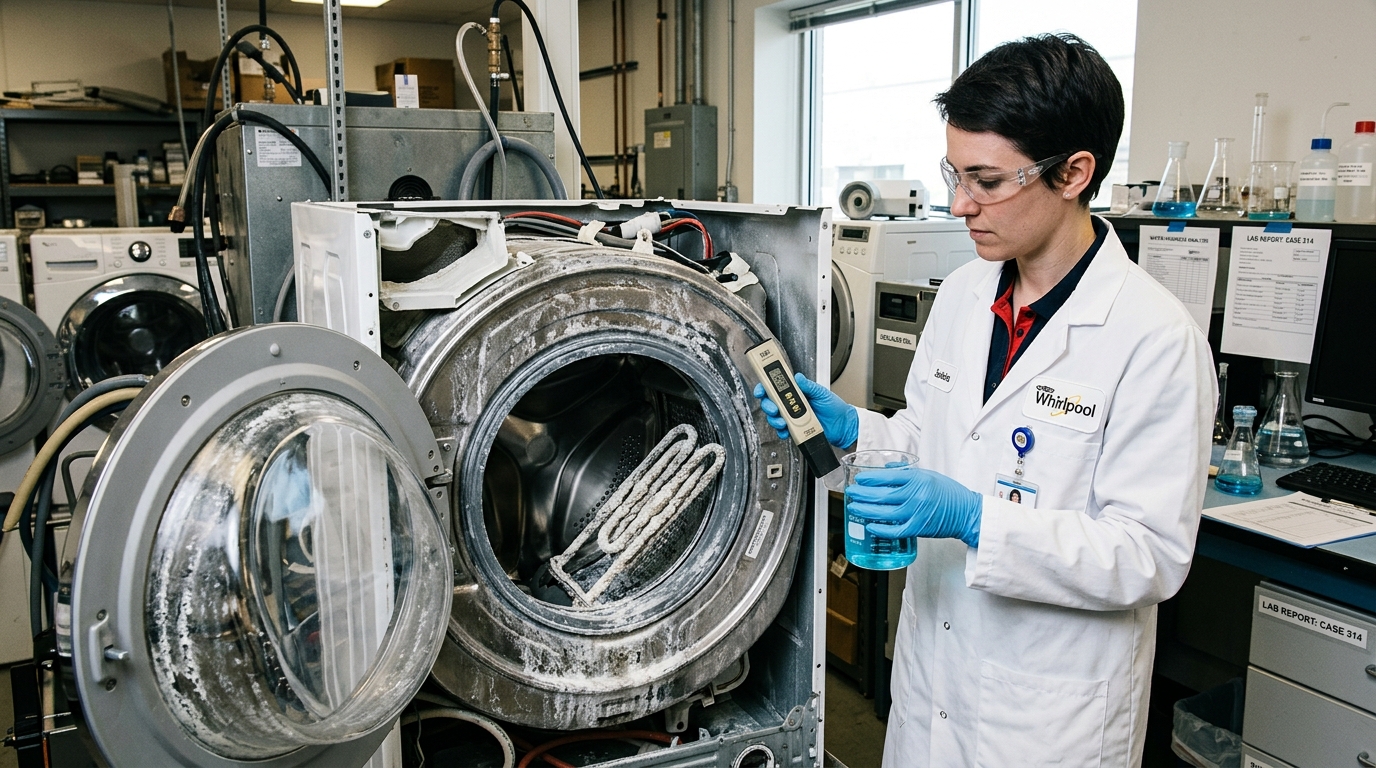
If you live in a high-rise gated society in Whitefield (Bengaluru), Golf Course Extension (Gurgaon), Noida Sector 137, or OMR (Chennai), you are likely familiar with the white crusty rings that coat your bathroom faucets, glass shower doors, and water kettles within days.
That same invisible enemy is silently sabotaging the most expensive utility appliance in your utility balcony: your front-load or top-load fully automatic washing machine.
After 12 to 18 months of trouble-free operation, subtle warning signs begin to appear:
- Freshly washed bedsheets and shirts emerge from the spin cycle with a faint, sour, mildew odor—even when dried immediately in the sun.
- Your 45-minute cotton wash cycle mysteriously stretches to 1 hour and 15 minutes because the internal water heater takes forever to reach 40°C.
- Dark cotton t-shirts carry faint chalky streaks and feel stiff and scratchy against your skin rather than soft.
- Eventually, during a spin cycle, an ominous rattling roar shakes your balcony floor, culminating in an "E03" drainage error code.
When the brand service technician arrives, the diagnosis is swift and expensive: "Sir, heating element has burnt out and the drum spider arm is corroded. Repair estimate is ₹6,500 to ₹9,000."
Why does Indian apartment water destroy modern washing machines so aggressively?
The answer lies in The Borewell Hardness Cycle & Detergent Scrud.
1. The Chemistry of Limescale in Indian Water Supplies
Most municipal tap water (like Cauvery water in Bangalore or Ganga water in Delhi) has a Total Dissolved Solids (TDS) level between 150 and 250 PPM. But due to urban water tanker shortages, apartment associations blend municipal water with deep borewell supplies, pushing utility tap TDS to 600 to 1,200 PPM.
This water is heavily saturated with dissolved Calcium Bicarbonate and Magnesium ions:
Whenever your washing machine heats water to 40°C or 60°C for hygiene or stain-removal cycles, thermal decomposition occurs:
- Dissolved calcium bicarbonate breaks down into insoluble Calcium Carbonate (CaCO₃)—commonly known as limescale.
- Limescale precipitates out of the water and forms a rock-hard, chalky ceramic shell around the nickel-chrome heating element and the outer surface of the stainless steel wash drum.
- Because limescale has an extremely low thermal conductivity (acting as an insulating thermal blanket), the heating element has to run twice as long to heat the wash bath, increasing electrical power draw by 25% to 35% until the element overheats and burns itself out.
2. The Biofilm Horror: What "Scrud" Actually Is
Limescale is only half the nightmare. The second half is a revolting substance appliance engineers call "Scrud":
- When you use excess liquid detergent or fabric softener in hard water, the un-rinsed soap binds with calcium minerals and body sebum (skin oils washed off your clothes).
- This sticky, grey wax coats the dark, damp, hidden void between the inner stainless steel drum and the outer plastic tub.
- Over weeks, bacteria and black mold (Cladosporium) colonize this sludge layer. Every time you run a wash, fresh water washes over this bacterial mat, infusing your clean clothes with microscopic mildew spores that activate the moment you sweat into your gym shirt.
Effective Maintenance Chemistry: Specialized Drum Descaling
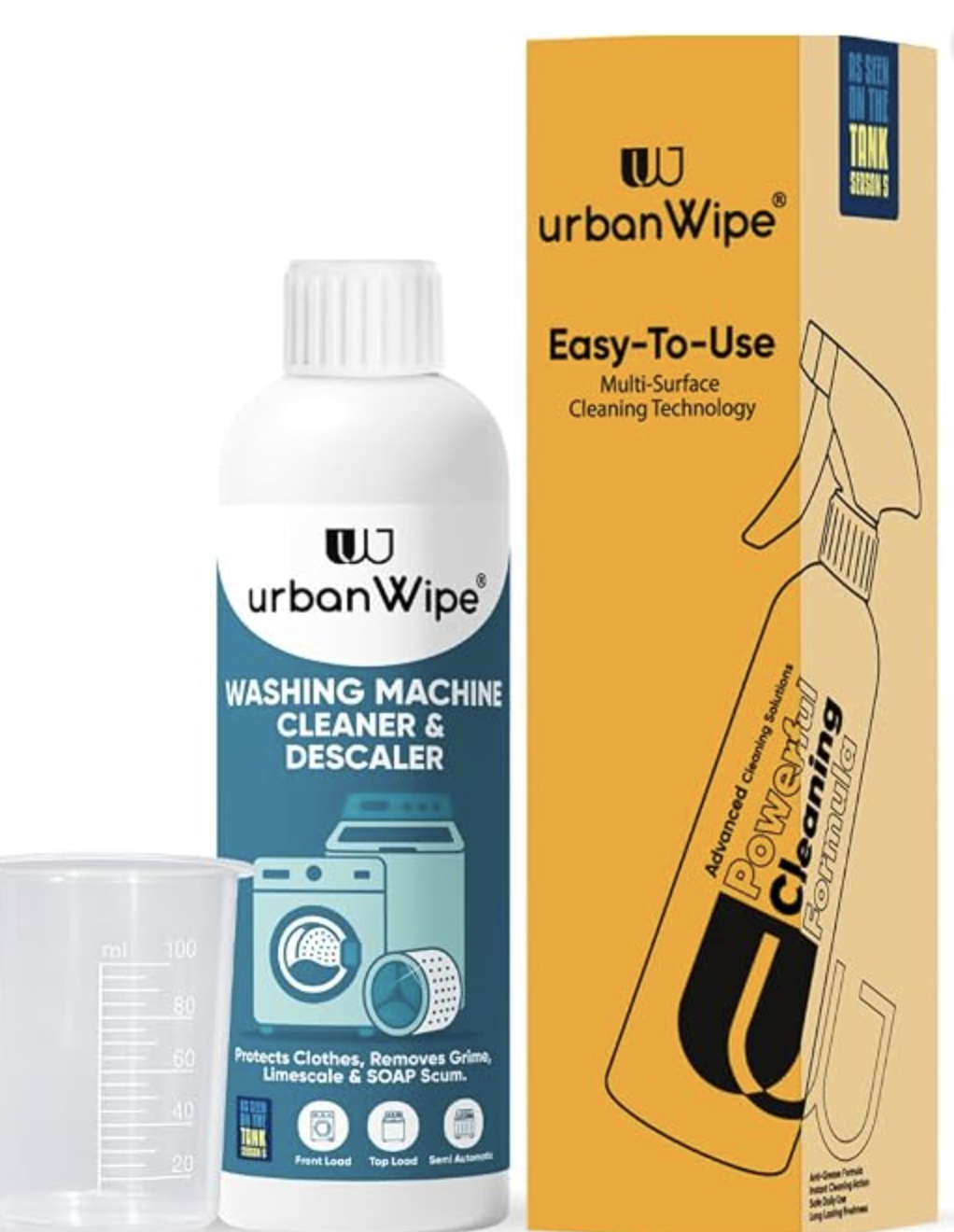
Here is a verified commercial-grade limescale and residue descaler engineered for Indian high-TDS water conditions in top-load and front-load automatic washers:
3. The Dangerous DIY Myth: Why Kitchen Vinegar Ruins Your Machine
A pervasive lifehack on Instagram and YouTube recommends pouring 500ml of standard white cooking vinegar (5% acetic acid) into your drum to clean it for ₹20.
Do not do this in a modern washing machine:
- Acetic acid is an unbuffered organic acid that aggressively attacks synthetic rubber compounds.
- Inside your front loader, the main drum door gasket (bellow seal) and the delicate rubber lip seals protecting the high-speed drum bearings are formulated to resist alkaline detergents—not continuous acid soaks.
- Repeated vinegar flushes harden and crack the bearing seal. Once water leaks past the seal into the steel ball bearings, the bearings rust and seize, destroying your machine's entire suspension drum.
- Professional descaling formulations use Sulfamic Acid or inhibited Citric Acid salts paired with corrosion inhibitors that dissolve calcium carbonate cleanly without attacking rubber gaskets or copper heater sheaths.
4. The 30-Minute Monthly Machine Health Protocol
To keep your machine operating at peak energy efficiency and odor-free in hard water areas:
Step 1: The Drain Pump Filter Purge
- Locate the small square service door at the bottom right front corner of your machine.
- Lay an old towel and a shallow tray on the floor.
- Unscrew the circular drain pump filter plug counter-clockwise.
- Pull out trapped coins, hairpins, collar buttons, and the thick layer of grey slime that accumulates around the drainage impeller. Rinse thoroughly under running tap water.
Step 2: The High-Temperature Chemical Descaling Cycle
- Pour 100ml to 150ml of quality descaler liquid directly into the empty drum (or detergent drawer).
- Set your machine to "Tub Clean" mode, or select the Cotton / Heavy cycle with water temperature set to 60°C (or 90°C) with no laundry inside.
- The hot acid bath will dissolve calcium carbonate scale off the heater and flush loosened biofilm out the drain hose.
Step 3: The Post-Wash Door & Drawer Rule
- The single most effective habit to prevent mold: never close the washing machine door completely after a cycle.
- Leave the drum door ajar by 2 inches and pull the detergent dispenser drawer open 1 inch.
- Allowing cross-ventilation lets internal drum moisture evaporate in 45 minutes, suffocating mold spores before they can colonize.
Lab Recommendations & Home Care Tools
To protect your household appliances and clothes from hard water damage:
- Live Multi-Store Price Comparison Engine: Compare prices on washing machines, water softeners, and appliance care essentials across Amazon and Flipkart.
- Home & Appliances Care Catalog: Explore verified maintenance solutions and descaling kits.
- The 10-Wash Cotton Kurta Guide: Read our textile lab investigation on why fabrics fade and stiffen in Indian laundry conditions.