
The Ceramic "Achar Barni" Lead Glaze Scandal: Why Cheap Pickle Jars Leech Heavy Metals into Mustard Oil & Salt
Traditional brown-and-white ceramic pickle jars (achar barnis) look rustic, nostalgic, and healthy on Amazon and craft marketplaces. But uncertified cottage-kiln ceramics frequently use low-temperature lead-silicate flux glazes. When exposed to hot mustard oil, citric acid, and salt for 6 months, toxic lead leeches directly into your mango achar. Here is the food-contact toxicology science and 3 checks before storing preserves.
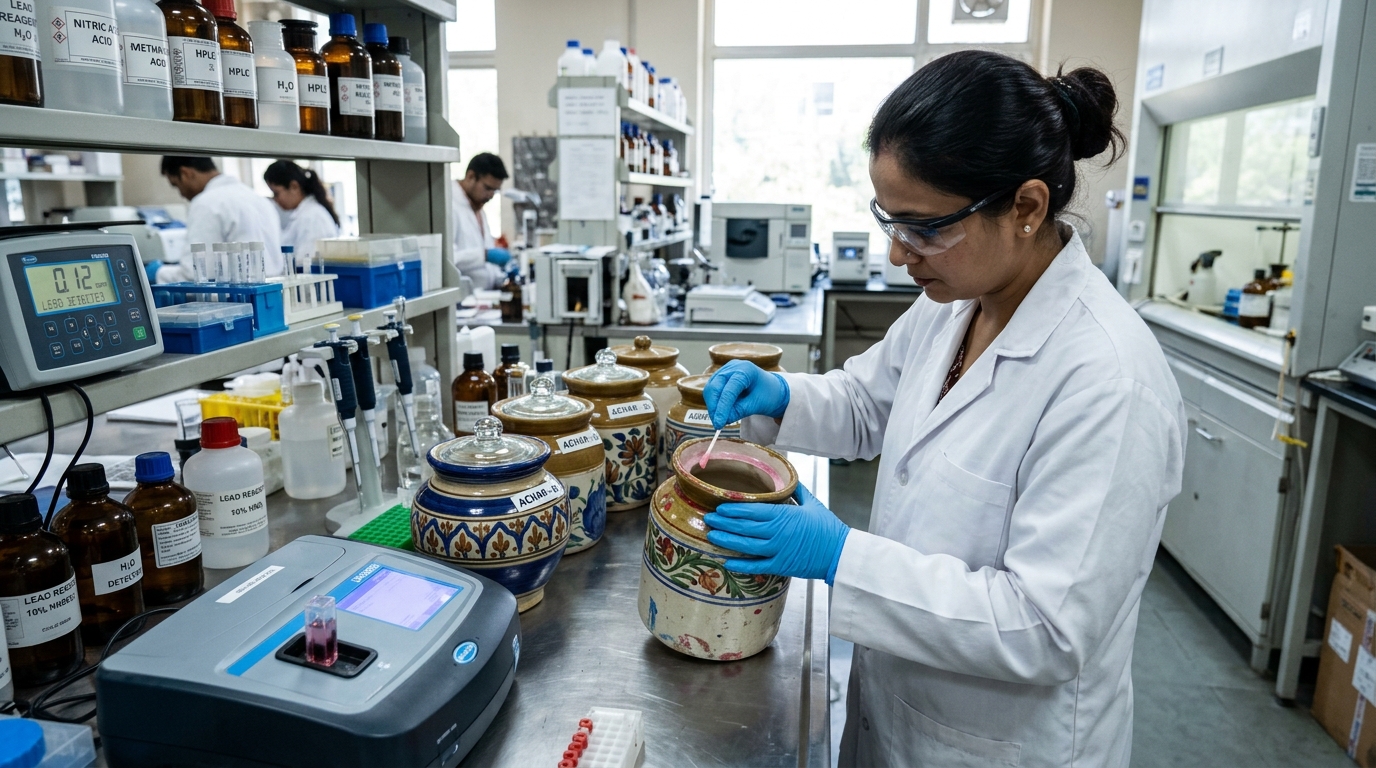
In almost every traditional Indian home, grandma’s homemade mango, lemon, and green chilli pickle (aam aur nimbu ka achar) occupied pride of place in a distinctive container: a heavy, glazed stoneware ceramic jar known as the Martaban or Achar Barni, finished with an earthy mustard-brown lid and ivory white base.
Because plastic jars leach microplastics and reactive metals like aluminium corrode under salt and vinegar, health-conscious urban shoppers across Amazon India, Flipkart, and artisan home decor websites are buying handmade ceramic pickle containers in record numbers:
- "Handmade Traditional Ceramic Pickle Storage Jars (1000ml Set of 2)"
- "Handpainted Glazed Stoneware Jars for Salt, Spices, Ghee & Achar"
- "100% Food Grade, Microwave Safe, Eco-Friendly Artisan Kitchenware"
- MRP: ₹1,499 ➔ Festive Deal Price: ₹499 to ₹699 (60% OFF)
The jars look picture-perfect on a wooden kitchen shelf—evoking authentic village nostalgia while promising safe, chemical-free food preservation.
Then month three of pickle fermentation arrives.
You lift the ceramic lid to spoon out fresh mango pickle. The inside surface of the jar, which was once glossy and mirror-smooth, has developed dull, milky white patches. A faint metallic sour tinge contaminates the aroma of the mustard oil. Wipe a damp tissue against the inner glazed rim, and a faint grey powdery film transfers onto the paper.
How can a natural clay jar contaminate traditional fermented pickles?
The answer is Low-Temperature Lead Flux Glazing in Unregulated Kilns.
1. The Chemistry of Pickle Storage: The Ultimate Acid-Lipid Solvent
Fermented Indian achar is one of the most chemically aggressive food substances in domestic culinary science:
- It contains concentrated Acetic Acid and Citric Acid (pH 3.0 to 3.8).
- It is saturated with high concentrations of Sodium Chloride (salt) acting as an electrolyte.
- It is submerged under a layer of Mustard Oil containing allyl isothiocyanate.
- It sits at ambient Indian summer room temperatures (32°C to 42°C) inside cupboards for 6 to 12 months.
In high-fired industrial stoneware (fired above 1,220°C in controlled electric kilns), clay minerals vitrify into non-porous glass using food-safe feldspar and quartz glazes that are completely inert to acid.
In low-cost cottage pottery clusters (such as unorganized units in Khurja or unregulated roadside workshops):
- Potters use wood or coal-fired kilns that cannot reach 1,200°C without consuming excessive fuel.
- To make glazes melt into a shiny, smooth glass surface at low temperatures (800°C to 950°C), manufacturers add Lead Oxide (Litharge / Red Lead) or Cadmium Carbonate as a chemical melting flux.
- When properly formulated into a complex borosilicate frit, lead can be partially bound. But in cheap manual glaze mixtures, free unbound lead ions remain near the surface glaze layer.
- Over 90 days, the warm citric acid and brine solution in your pickle slowly etches the glaze, leaching neurotoxic Lead (Pb) ions directly into the edible mustard oil.
2. The FSSAI & Bureau of Indian Standards (BIS) Limit
Under Indian Food Safety standards (FSSAI Food Contact Regulations and IS 9806 for Ceramic Ware):
- The legal permissible limit for lead extraction into 4% acetic acid food simulants is strictly capped below 0.5 mg/L (ppm).
- Independent lab testing of uncertified, roadside-sourced ceramic jars frequently reveals lead leaching levels exceeding 15 mg/L to 45 mg/L—over 30 to 90 times higher than safe human tolerance limits!
- Chronic low-dose lead exposure bioaccumulates in bones and organs, causing cognitive decline in children, kidney dysfunction, and chronic hypertension in adults.
Featured Ceramic Craftsmanship: Non-Toxic High-Fired Storage
Here is how verified, high-temperature fired food-grade stoneware containers with authentic vitrified glaze layers keep everyday salt, spices, and pickles fresh without chemical contamination:
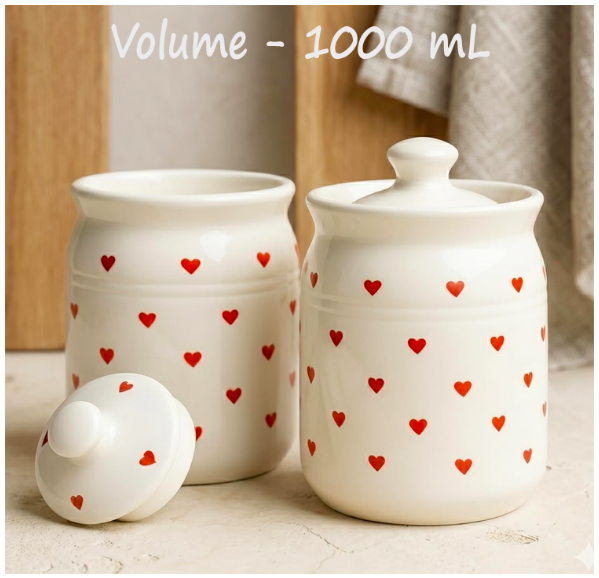
D'Maiolica Ceramic 1000ml Handmade Pickle Jars (set of 2) | Handpainted Heart 1 kg Ceramic Storage Containers | Kitchen Jars for Salt (Set of 2) | Jars for Achar, Spices, Salt (Red HandPainted Heart)
3. The 3 Diagnostic Checks Before Storing Pickles in Ceramic Jars
If you purchased artisan ceramic jars online, run these three simple checks before transferring your precious homemade achar:
Check 1: The Vinegar Acid Etch Soak Test (The 48-Hour Household Assay)
- Pour 150ml of standard white cooking vinegar (5% acetic acid) into the clean ceramic jar so it covers half the bottom and lower wall.
- Let it sit undisturbed at room temperature for 48 hours.
- Pour out the vinegar and wash the jar with plain water. Let it dry completely.
- Pass (Vitrified Food-Safe Glaze): The soaked half remains mirror-glossy with zero perceptible difference from the unsoaked upper wall.
- Fail (Acid-Reactive Glaze): The vinegar level leaves a distinct, dull, frosted waterline. The glaze has lost its shine and feels slightly rough or powdery to the touch. If vinegar etches the glaze in 2 days, your achar will leech heavy metals in 2 weeks.
Check 2: The Acoustic Resonance Tap Test
- Hold the jar suspended by its rim using two fingertips.
- Tap the belly of the jar gently with a wooden pencil or metal butter knife.
- High-Fired Vitrified Stoneware: Produces a clear, high-pitched, bell-like ring that sustains for 1 to 2 seconds.
- Low-Fired Porous Terracotta: Produces a dull, thudding, hollow clunk. Low-fired pottery is porous and absorbs moisture into the clay body beneath the glaze, breeding mold behind the paint.
Check 3: The Rapid Lead-Check Chemical Swab (Available Online)
- Purchase a pack of disposable Lead Check chemical test swabs (using sodium rhodizonate indicator).
- Wet the swab tip with water and rub it firmly against the inner glazed surface of the jar for 30 seconds.
- If the swab turns from mustard-yellow to bright pink or red, the glaze contains accessible, free surface lead. Discard the jar immediately or use it strictly for dry plastic-wrapped storage.
Lab Recommendations & Safe Kitchen Tools
To store traditional Indian condiments safely without toxic hazards:
- Live Multi-Store Price Comparison Engine: Compare verified prices on glassware, ceramic containers, and kitchen storage across Amazon and Flipkart.
- Kitchen & Tableware Catalog: Discover food-grade certified ceramic canisters and traditional jars.
- The Washing Machine Hard Water Crisis: Read our appliance care investigation on mineral buildup and water chemistry.