
The ₹999 "Pure Kanjivaram Silk" Scam: The 3 Forensic Home Tests That Expose Polyester Dupes on Meesho and Amazon
Festive banners on Meesho, Amazon, and Flipkart promise "100% Pure Kanjivaram and Banarasi Katan Silk Sarees with Rich Zari Work" slashed from ₹8,999 down to ₹999. But real Mulberry silk cannot physically be harvested, reeled, and hand-woven at that price. Here is how Surat powerlooms mimic silk using micro-polyester and plastic lurex—and the 3 home tests to unmask counterfeits before cutting tags.
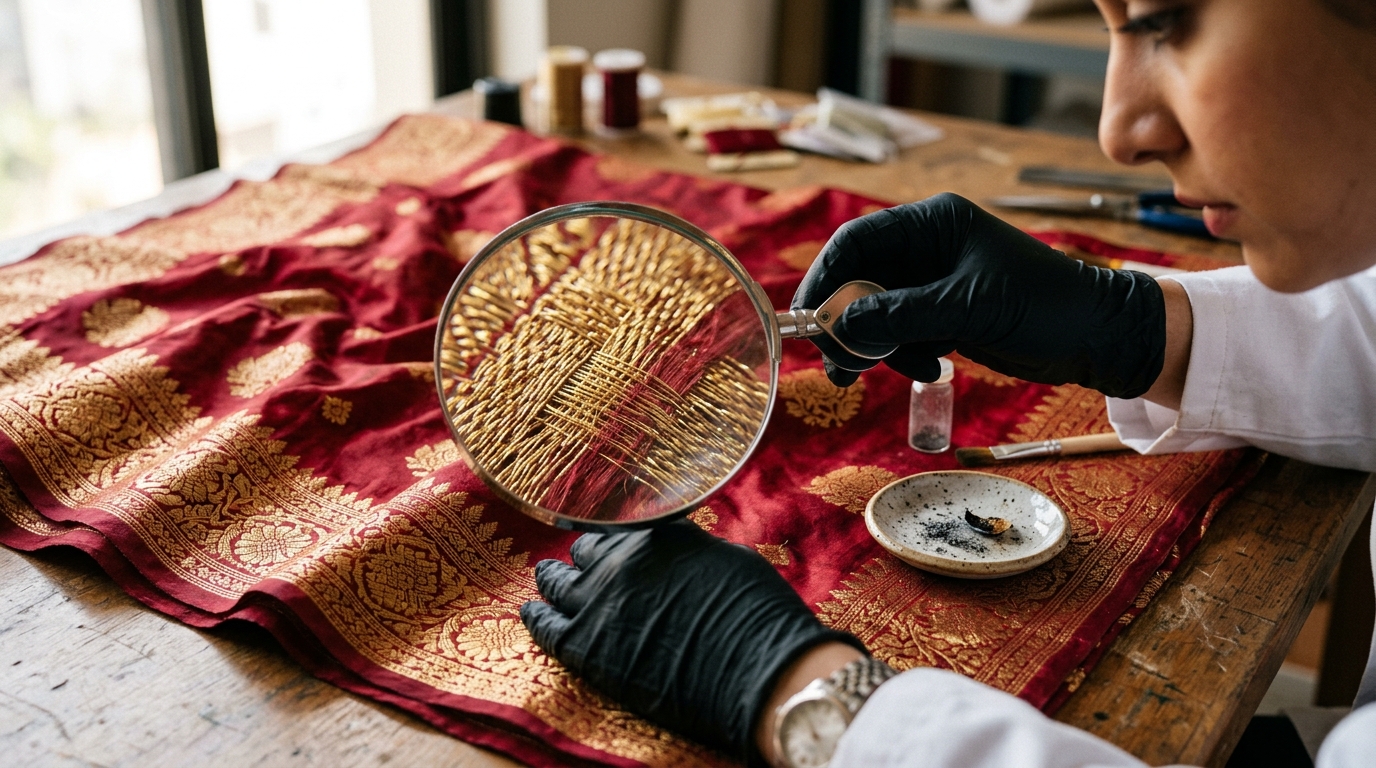
When festive occasions like Navratri, Karwa Chauth, Diwali, and the winter wedding season approach in India, e-commerce search algorithms light up with the same irresistible query: "Pure Kanjivaram silk saree with contrast border" and "Original Banarasi bridal saree under ₹1,500".
The listings on platforms like Meesho, Flipkart, and Amazon present an absolute masterclass in commercial glamour. Studio photographs showcase majestic crimson, bottle-green, and royal blue drapes shimmering with elaborate golden floral jaal and peacock borders. Bold product headers announce:
- "Pure Katan Soft Silk Banarasi Festive Saree"
- "Traditional Heavy Rich Zari Pallu with Jacquard Weaving"
- "Includes Unstitched Running Blouse Piece"
- MRP: ₹9,999 ➔ Festive Deal Price: ₹949 (90% OFF)
To millions of shoppers looking for royal ethnic elegance on a budget, this looks like the ultimate direct-from-weaver wholesale miracle.
Then you unwrap the cardboard parcel.
The fabric looks shiny—almost blindingly reflective under room lights—yet it feels cold and slippery like an umbrella cover. Drape it over your shoulder, and instead of the graceful, fluid fall of heritage silk, the pleats stick out stiffly like folded chart paper. Walk into an Indian humid family gathering for two hours, and the synthetic weave traps body heat like a greenhouse, suffocating your skin.
The truth is, authentic handloom Kanjivaram or Banarasi silk cannot physically exist at sub-₹2,000 retail price points. Understanding the unit economics of sericulture and running 3 forensic home tests will save you from wearing cheap plastic masquerading as heritage craftsmanship.
1. The Sericulture Math: Why ₹999 Real Silk is a Physical Impossibility
To understand why that ₹999 listing is an outright synthetic dupe, consider the raw agricultural economics of authentic Indian silk production governed by the Central Silk Board of India:
- Mulberry Silk Cocoons: It takes approximately 2,500 to 3,000 silkworm (Bombyx mori) cocoons to reel a single kilogram of raw Mulberry silk yarn.
- Raw Yarn Price: As of 2026, raw Mulberry silk yarn trades in Bangalore and Varanasi wholesale mandis at roughly ₹4,200 to ₹5,800 per kilogram.
- Weight of a Heritage Saree: A traditional 6-yard Kanjivaram or Banarasi silk saree contains between 500 grams and 800 grams of silk warp and weft. That means the raw unspun thread alone costs between ₹2,500 and ₹4,000 before a single day of weaving or zari drafting begins.
- Artisan Labour: Hand-weaving an authentic jacquard pallu takes master weavers anywhere from 4 to 20 days.
How do Surat and Varanasi powerlooms produce sarees that sell online for ₹799 to ₹1,299 after platform commissions, shipping, and promotional discounts?
They replace natural sericin protein fibers with Surat Micro-Polyester Filament Yarn costing roughly ₹120 per kilogram. To give polyester the tactile softness of raw silk, the grey cloth undergoes a chemical bath in caustic soda (alkali de-weighting) and silicone softening emulsions. The finish feels temporarily silky in the box—but breaks down the instant it meets sweat or laundry detergent.
2. The "Plastic Lurex" Zari Trick
The second major deception in budget festive sarees concerns the Zari (the metallic gold or silver border):
- Genuine Zari: Authentic Kanjivaram zari consists of a core silk or cotton yarn wrapped tightly in a flattened silver ribbon, which is then electroplated with 24-karat liquid gold (Pure Zari), or high-purity copper core electroplated with silver (Tested Zari). It possesses an understated, warm antique glow that patinas gracefully over decades.
- Fake Plastic Lurex: Sub-₹1,500 sarees use metallized polyester film (BOPET) slit into micro-ribbons. This is essentially the same vacuum-metallized plastic foil used to wrap confectionery chocolates. Under fluorescent lighting, it emits a harsh, oily yellow glare. Over time, friction against jewelry causes the metalized coating to flake off, leaving behind bare grey plastic fuzz that scratches your wrists and neck.
Featured Ethnic Showcase: Banarasi Jacquard Weave
Here is a verified traditional Banarasi style saree popular among festive shoppers, featuring full jacquard geometric detailing:
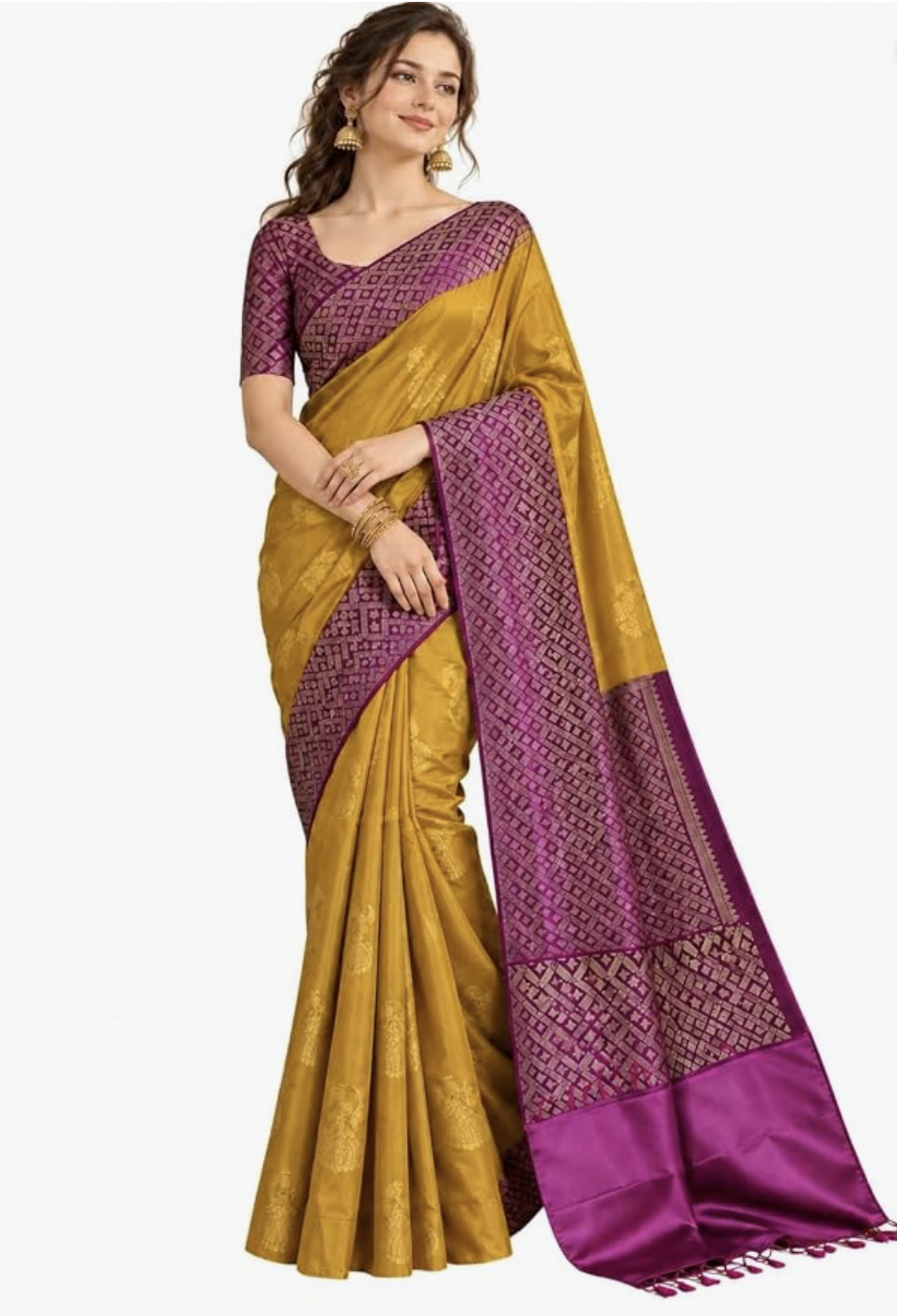
Womens Banarasi Kanjivaram Silk Saree | Traditional Jhumka Motif & Contrast Geometric Border | Includes Unstitched Blouse Piece
3. The 3 Forensic Home Tests to Run Before Cutting Tags
If you ordered an ethnic saree online and need to verify whether it contains authentic silk fibers before your 7-day return period closes, perform these three physical tests:
Test 1: The Single-Thread Ash & Burn Test (The Gold Standard)
Natural silk is an animal protein fiber (fibroin), chemically identical to human hair. Polyester is a synthetic petroleum polymer (polyethylene terephthalate).
- Pull one single thread (roughly 2 inches long) from the unstitched running blouse border or the raw fringed edge of the pallu.
- Hold the thread with metal tweezers over a ceramic saucer and touch it with a lit matchstick.
- If it is Pure Silk:
- It burns slowly and extinguishes itself immediately the moment you remove the flame.
- It emits the unmistakable, sharp organic smell of burning hair or charred feathers.
- The residue forms a crisp, brittle, dark ash bead that pulverizes cleanly into fine black dust when crushed between your fingertips.
- If it is Fake Polyester / Art Silk:
- It melts rapidly into a gooey puddle and flares up with black petrochemical smoke.
- It gives off a sickly-sweet chemical odor resembling burnt plastic or asphalt.
- The residue hardens into an indestructible, hard black plastic bead that cannot be crushed with your fingers.
Test 2: The Palm Friction Thermal Conductivity Test
Pure natural silk is an exceptionally poor conductor of thermal energy.
- Lay the saree flat on a table in an air-conditioned or temperate room.
- Place your bare palm flat against the fabric surface and vigorously rub your hand back and forth for 10 seconds.
- Real Silk will instantly generate and trap perceptible body warmth underneath your palm due to its natural protein structure.
- Synthetic Polyester / Nylon will dissipate heat instantly, feeling uncomfortably cool and clammy regardless of how hard you rub.
Test 3: The Reverse Loom Float & Zari Scratch Audit
Turn the saree over and examine the reverse underside of the heavy pallu motifs:
- Authentic handlooms or semi-automatic warp jacquards display irregular, tactile thread floats where the weaver reversed the shuttle.
- Run a clean fingernail firmly across the golden zari yarn on the reverse side. If golden flakes immediately scrape off onto your nail bed, revealing a transparent white plastic core thread, the zari is low-grade PET film.
4. How to Spot Counterfeit "Silk Mark" Tags Online
Under Indian trade regulations, genuine 100% natural silk textiles are certified by the Silk Mark Organization of India (SMOI), a body sponsored by the Ministry of Textiles.
Counterfeit sellers on marketplace platforms frequently exploit this trust:
- Bogus Paper Tags: Sellers print generic green tags featuring a downloaded Silk Mark logo with no serialized registration code.
- Dead QR Codes: Authentic Silk Mark labels carry a unique, tamper-evident security hologram with a 13-digit alphanumeric serial number and a QR code linking directly to
silkmarkindia.comverifying the licensed manufacturer. If the QR code opens a static image on Imgur or a 404 page, the certification is fraudulent.
Lab Recommendations & Ethnic Buying Tools
To protect your wardrobe investments and avoid paying silk prices for polyester substitutes:
- Live Multi-Store Price Comparison Engine: Check verified prices for festive sarees and ethnic sets across Amazon, Flipkart, and Meesho.
- Women's Ethnic & Apparel Catalog: Explore handpicked kurtas, ethnic sets, and festive drapes.
- The 10-Wash Cotton Reality: Read our textile lab investigation on why budget cotton kurtas shrink and twist sideways in the washing machine.