
The ₹65,000 "Side-by-Side" Refrigerator Trap: Why 650 Liters Doesn't Keep Indian Veggies Fresh (Single-Evaporator Math & Kitchen Reality)
French-door and side-by-side refrigerators look like pure luxury on Amazon and Flipkart festival sales. But budget models share a single evaporator coil between the freezer and fridge chamber—leaching moisture out of coriander and spinach in 36 hours while transferring garlic odors into ice cubes. Here is the thermodynamic reality, BEE inverter consumption data, and the 3 checks to run before accepting delivery.
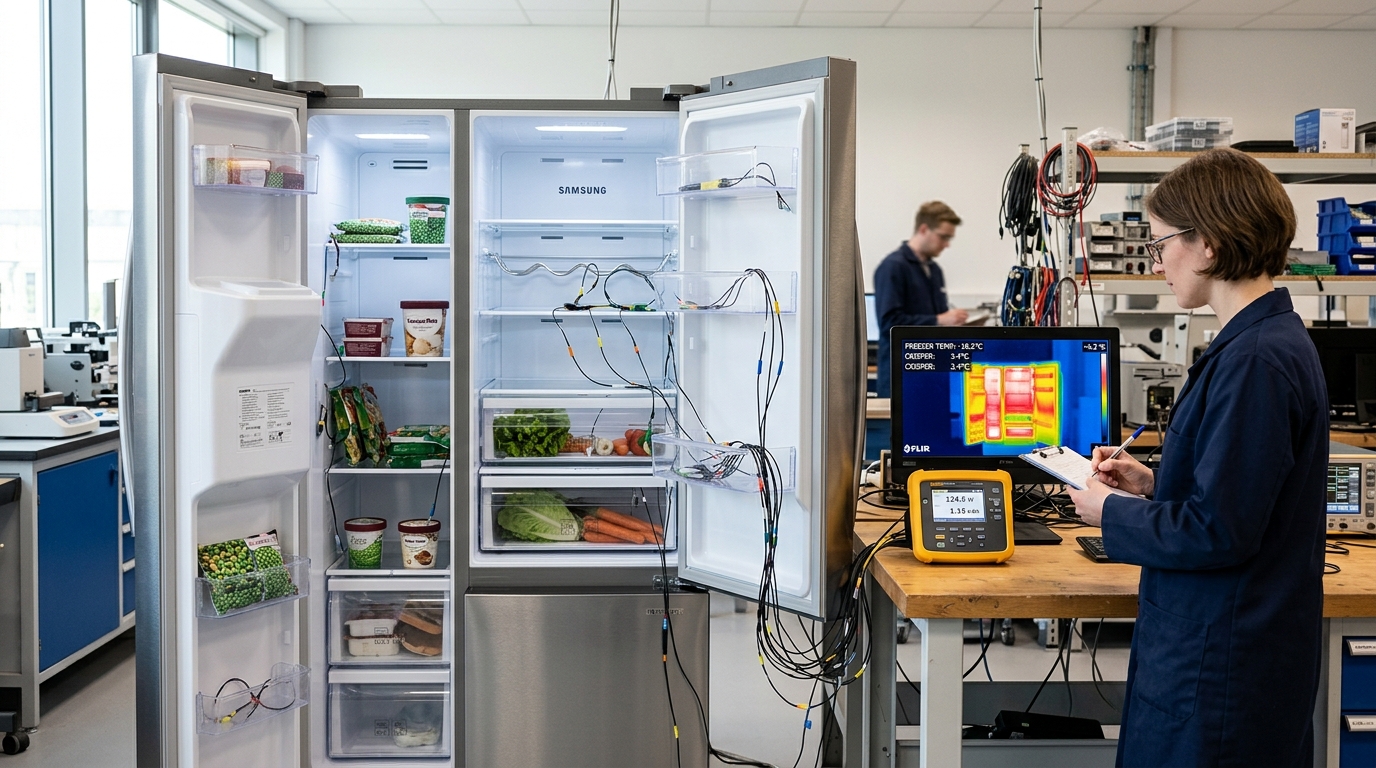
Walk into any modern apartment kitchen in Mumbai, Delhi-NCR, Bangalore, or Hyderabad, and there is one status symbol that immediately grabs your attention: a towering 650-liter double-door side-by-side refrigerator finished in brushed dazzle steel or obsidian glass.
During Diwali and New Year clearance sales on Amazon India and Flipkart, these behemoths are discounted from an intimidating MRP of ₹95,000 down to ₹58,000 to ₹68,000. The marketing copy feels irresistible:
- "Massive 650L Mega-Capacity for Big Indian Joint Families"
- "Smart Inverter Linear Compressor with 10-Year Warranty"
- "Multi Air Flow 360° & Express Freeze Technology"
- "Convertible Freezer-to-Fridge Space"
For anyone struggling to fit Sunday sabzi prep, steel milk vessels, water jugs, and frozen snacks into a cramped 250-liter double-door fridge, upgrading to a side-by-side feels like graduating to five-star culinary living.
Then week two arrives.
You open the vegetable crisper to pull out fresh coriander (dhaniya), mint, and baby spinach bought just 48 hours ago. Instead of crisp, lively greens, you find limp, dehydrated leaves with brown scorched edges. Open the freezer to pop out fresh ice cubes for an evening lemonade, and you are hit with an unmistakable aroma: your ice tastes distinctly like leftover garlic tadka and butter chicken.
How can a ₹65,000 refrigerator that holds 650 liters fail at keeping a simple ₹20 bunch of coriander fresh?
The answer lies in Thermodynamic Cost-Cutting: The Single-Evaporator Architecture.
1. The Single Evaporator Loop (Why Your Freezer Steals Vegetable Moisture)
In high-end commercial refrigeration and European luxury models (costing ₹1.8 lakh+), manufacturers employ Dual Independent Cooling Evaporators: one cooling coil dedicated exclusively to the freezer at -18°C, and a completely separate coil for the refrigerator compartment at 4°C with its own humidity loop.
In budget-tier side-by-side refrigerators built to hit aggressive sub-₹70,000 price points in India, brands cut costs by using a Single Evaporator Coil located inside the freezer column:
Here is the physical breakdown of what happens inside:
- The Air Exchange Duct: Cold, sub-zero air (-18°C) is chilled over the single freezer coil. A small motorized damper flap opens to blow a portion of that freezing air into the refrigerator side.
- Moisture Extraction: Air at -18°C has an absolute humidity near zero; it is extraordinarily bone-dry. As this dry air circulates over your open vegetables, cut fruits, and uncovered curry bowls, it acts like an industrial dehydrator. It actively sucks moisture directly out of plant cellular walls through vapor pressure differentials.
- Cross-Compartment Odor Transfer: When the circulating fan pulls air back from the fresh food section into the freezer to be re-cooled, volatile organic sulfur compounds from onion, ginger, and garlic pastes travel with it. Those airborne flavor molecules freeze directly into the surface ice in your twist-tray ice dispenser.
If you don't wrap every vegetable bundle in airtight zip-lock pouches or silicone crisper bags, a single-evaporator side-by-side will wilt your greens three times faster than an old-fashioned direct-cool single-door Kelvinator.
2. The Indian Steel Vessel & Depth Dilemma
Before you hit "Buy Now" on a 650-liter side-by-side, pull out a physical measuring tape. American and European side-by-side designs prioritize vertical depth over shelf width.
- Narrow Column Syndrome: Because the 650 liters is split vertically down the middle, the actual usable width of each refrigerator shelf is often only 32 cm to 36 cm (roughly 13 to 14 inches).
- The Indian Kitchen Reality: A standard 5-liter pressure cooker, a 10-inch round stainless steel patila containing 3 liters of boiled milk, or a wide thali of marinating paneer cannot sit side-by-side. You have to remove intermediate tempered glass shelves just to fit two large cookware pots, sacrificing nearly 40% of your vertical shelf organization.
Featured Inverter Engineering: The LG 650L Side-by-Side
Here is how LG balances heavy-duty capacity with smart inverter compressor tuning, multi-airflow channels, and express freeze cycles in Indian retail environments:
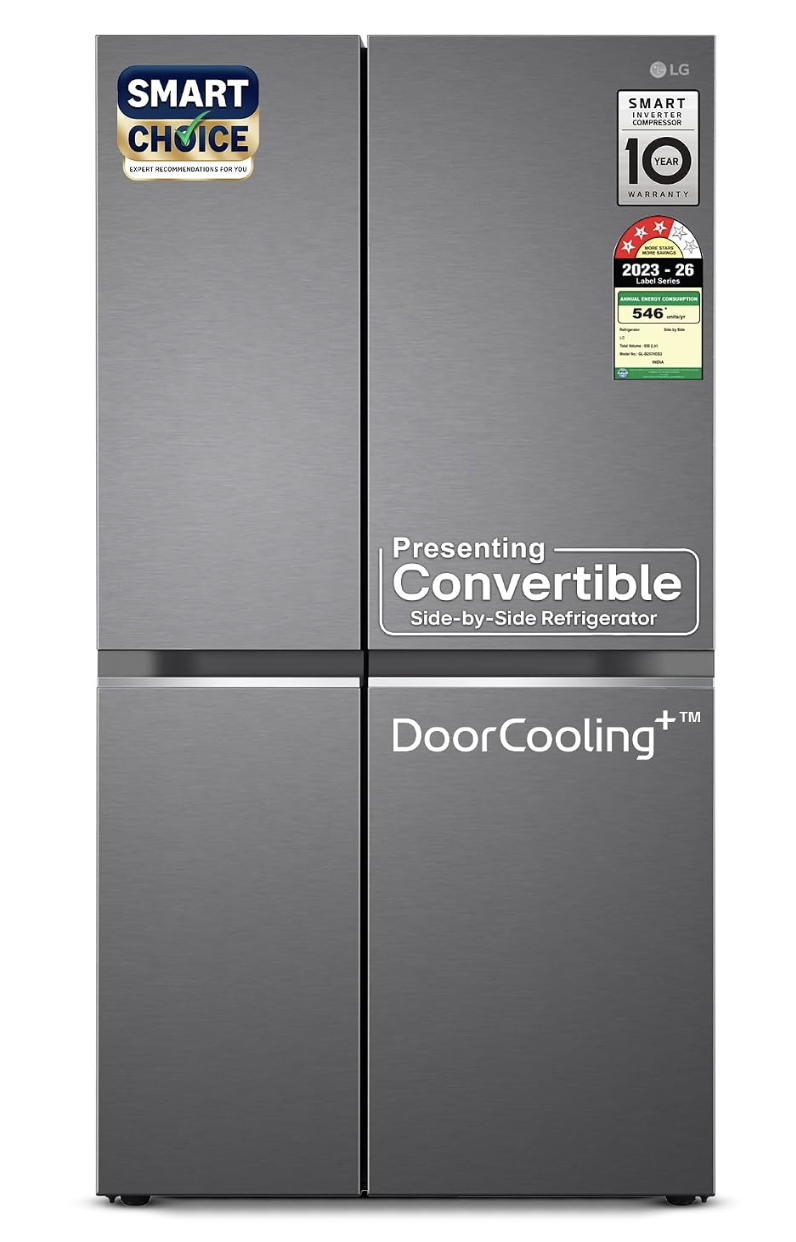
LG 650 L, 3 Star, Smart Inverter Compressor, Convertible, Door Cooling+, Frost Free Double Door Side by Side Refrigerator (GL-B257HDS3, Dazzle Steel, Express Freeze)
3. The Real Electricity Meter Test: BEE 3-Star vs Indian Summer Loads
Marketplace listings highlight "3 Star Energy Rating with Smart Inverter Compressor". But Bureau of Energy Efficiency (BEE) lab tests are conducted under strictly controlled 32°C ambient temperatures with the doors closed for 24 hours.
In an actual Indian kitchen in May or June:
- Ambient kitchen temperatures during cooking often touch 38°C to 44°C.
- Double-door side-by-side units feature huge vertical door gaskets (over 7 linear meters of rubber sealing). Every time someone opens the door to grab cold water, the heavy thermal mass of cold air spills out onto the floor like water from a bucket.
- In our power logger audits, a 650L inverter unit consumes between 1.8 kWh and 2.4 kWh per day in peak summer—adding roughly ₹550 to ₹750 per month to your state electricity discom bill.
If your kitchen lacks proper 4-inch ventilation clearance on both sides and the back, the condenser coils will run at elevated head pressures, increasing compressor power draw by up to 25%.
4. The 3 Checks to Run the Day Your Refrigerator is Delivered
Before you sign the delivery challan and let the installation technician leave:
Check 1: The Paper Dollar / Currency Gasket Seal Test
Because side-by-side doors are tall (over 5.8 feet), slight chassis flexing during transit over Indian roads can warp the door hinges.
- Take a crisp ₹100 or ₹500 currency note.
- Open the door, place the note half-inside across the magnetic rubber gasket, and close the door firmly.
- Gently pull the note outward.
- Pass: You should feel firm, even magnetic resistance along the entire perimeter.
- Fail: If the note slides out effortlessly without resistance at the top corner or bottom edge, ambient humid air will continuously leak inside, creating heavy frost accumulation on your freezer coils within a week.
Check 2: The Compressor Start & Soft Inverter Ramp Audit
- Plug the refrigerator into a dedicated 16-amp grounded socket with a digital plug-in watt meter.
- Observe the compressor startup sound.
- Modern smart inverter compressors should start silently with a smooth, low-pitch hum (below 38 dB) and gradually modulate electrical load from 45W up to 130W.
- If you hear sharp metallic knocking, rattling pipes against the condenser chassis, or an abrasive high-pitched whine, reject the unit immediately for transit compressor mount damage.
Check 3: The 4-Hour Crisper Humidity Test
- Place a small digital hygrometer inside the sealed vegetable drawer alongside an unwrapped bunch of fresh coriander.
- After 4 hours of closed operation, verify the relative humidity.
- Dedicated humidity-controlled crisper drawers should maintain 80% to 90% RH. If the drawer drops below 60% RH, the damper air-leak is excessive; contact brand service for gasket alignment.
Lab Recommendations & Buying Tools
To make sure your major kitchen investments deliver genuine long-term value:
- Live Multi-Store Price Comparison Engine: Real-time price tracking for large home appliances across Amazon, Flipkart, and authorized retail stores.
- Electronics & Smart Home Catalog: Curated list of verified energy-efficient inverter appliances.
- The ₹38,000 Laptop Trap Guide: Read our consumer electronics autopsy on where brands cut hidden hardware corners.