
The ₹499 "1-Gram Gold Plated" Temple Jewelry Illusion: Why Fake Kemp Stones and Toxic Nickel Alloy Turn Your Neck Green in 4 Hours
Festive imitation temple chokers and Lakshmi bridal sets priced at ₹399–₹699 flood Amazon and Meesho during Navratri and wedding seasons. But beneath the flash "matte gold" finish lies recycled zinc and unrefined copper alloys that leach free nickel into sweat—causing itchy contact dermatitis and black-green collarbone stains. Here is the metallurgical breakdown and 3 home tests to run before festival wear.
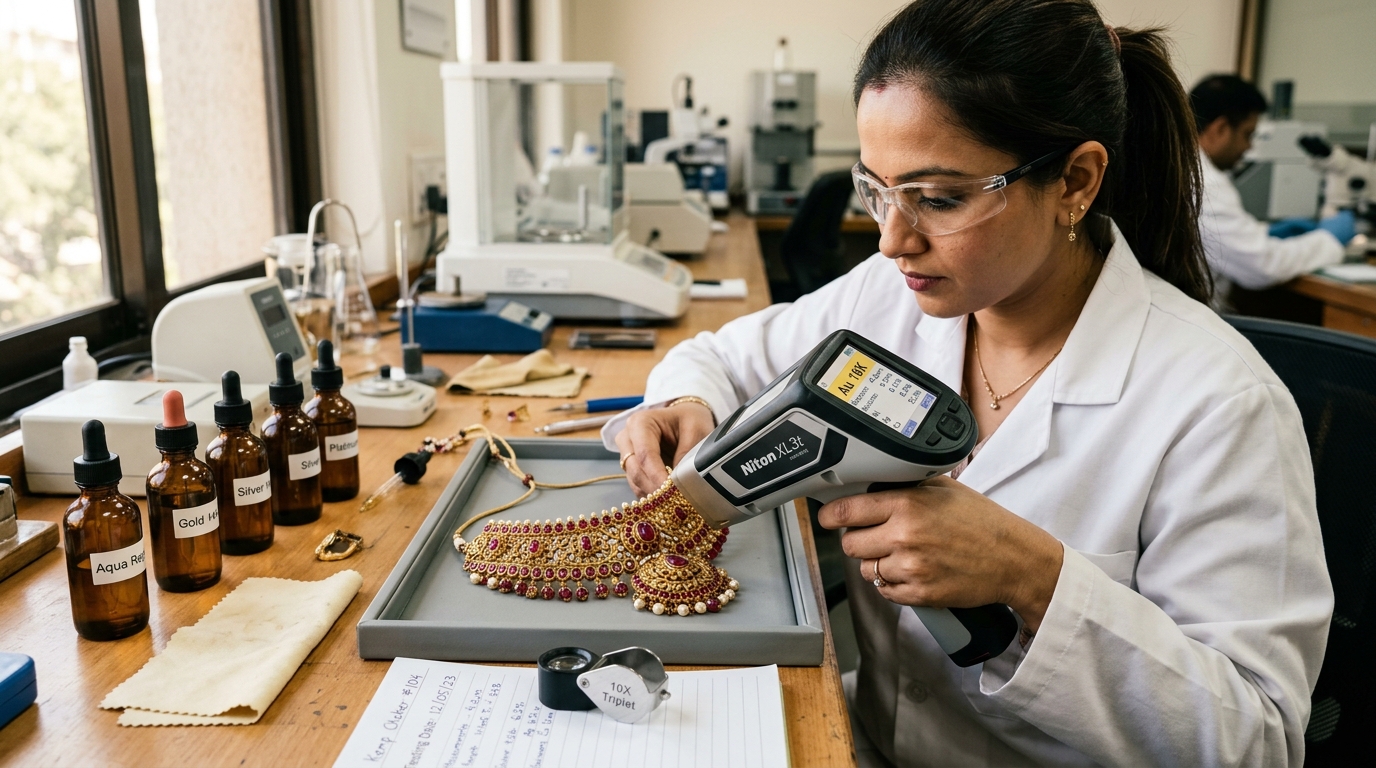
With festive seasons like Navratri, Dussehra, Diwali, and the winter wedding calendar in full swing across India, traditional ethnic accessorizing takes center stage. Searches for "antique gold temple choker necklace" and "South Indian Kemp stone bridal jewellery sets" explode across Amazon, Flipkart, and Meesho.
The product listings look breathtakingly majestic. High-definition studio shots show intricate antique matte finishes, ornate embossed motifs of Goddess Lakshmi seated upon lotus petals, cascades of seed pearls, and deep ruby-red Kemp stones. Bullet points boldly declare:
- "Traditional Antique Gold Plated Goddess Lakshmi Temple Choker Set"
- "Handcrafted with Authentic Kemp & Ruby Stones & Matching Jhumkas"
- "Premium High-Grade Brass Base with Long-Lasting Matte Gold Polish"
- "Skin-Friendly, Nickel-Free & Lead-Free Guaranteed"
- MRP: ₹3,499 ➔ Festive Deal Price: ₹449 to ₹699 (85% OFF)
To any woman or family outfitting bridesmaids for a sangeet or garba night, getting an opulent South Indian temple jewelry set for less than the cost of a movie ticket feels like an incredible steal.
Then comes hour four of the event.
Under the warm banquet chandeliers, amidst lively dance performances and humid festive crowds, your collarbone begins to itch with an intense, burning prickle. You step into the restroom, unhook the choker, and look in the mirror in horror:
- A dirty, dark green-and-black oxidized band is stained across your neck and collarbone.
- Small raised, red allergic bumps (contact dermatitis) flare across where the heavy choker rested against your bare skin.
- Rub a tissue over the reverse side of the necklace, and a pungent, sour metallic smell clings to your fingertips.
How can a necklace marketed as "Skin-Friendly Brass with Micro Gold Polish" cause such an immediate, toxic skin reaction?
The answer lies in Substandard Metallurgy and 0.02-Micron Flash Lacquer.
1. The Chemistry of the "Green Neck": Cheap Zinc Pot-Metal & Nickel Leaching
In authentic premium bridal imitation jewellery, artisans use a base of high-purity red brass (an alloy of 85% copper and 15% zinc). This base is treated, electroplated with a substantial barrier coat of copper, and layered with 1 to 2 microns of authentic 24-karat gold plating, sealed under a baked hypo-allergenic electrophoretic lacquer (e-coating).
In sub-₹500 marketplace sets manufactured in mass-casting workshops in Rajkot, Surat, or imported liquidation lots, manufacturers cut costs ruthlessly:
- The Core Metal: Scrap Pot-Metal (Zamak 2/3): The base is not brass. It is made from recycled scrap zinc, lead trimmings, and unrefined scrap brass melted down in crude crucibles. To make the metal flow easily into detailed silicon molds at low temperatures, high percentages of cheap nickel are deliberately added.
- The "Flash" Gold Finish: Genuine micro-gold plating requires gold bath electrolysis. Cheap sets receive a "Flash Dip" (less than 0.02 to 0.05 microns thick)—often consisting of a synthetic chemical yellow dye dissolved in a solvent lacquer with negligible gold content.
- The Sweat Reaction: Human sweat is naturally acidic (pH 4.5 to 6.0) and contains sodium chloride and lactic acid. Within 120 minutes of dancing or sitting in an Indian humid hall, acidic sweat completely dissolves the paper-thin lacquer.
- Copper & Nickel Oxidation: Sweat reacts directly with the unrefined copper and nickel core: 2Cu + CO₂ + O₂ + H₂O → Cu₂CO₃(OH)₂ (Basic Copper Carbonate) This chemical compound is verdigris—a vibrant green, insoluble crust that bonds to skin proteins. Worse, free nickel ions penetrate skin pores, triggering an immediate Type IV cell-mediated allergic dermatitis in over 18% of the Indian population.
2. Fake Kemp Stones vs Real Glass/Spinel Crystals
Traditional South Indian Kemp stones—historically created for temple dancers and royal deities in Tamil Nadu—were made from cut red spinels, garnets, or high-refractive glass set over silver foil beds that refracted lamp light like glowing rubies.
In ₹499 online sets:
- The "Kemp stones" are cheap injection-molded acrylic (plastic) beads.
- They are not hand-set with prongs. They are fixed into hollow cavities using low-grade industrial Cyanoacrylate glue.
- Under body heat or perfume mist, the glue softens, and the plastic stones fall off during your event, leaving ugly empty metal sockets.
Featured Traditional Temple Craftsmanship
Here is a verified traditional Goddess Lakshmi antique set with classic jhumkas popular across festive ethnic celebrations:
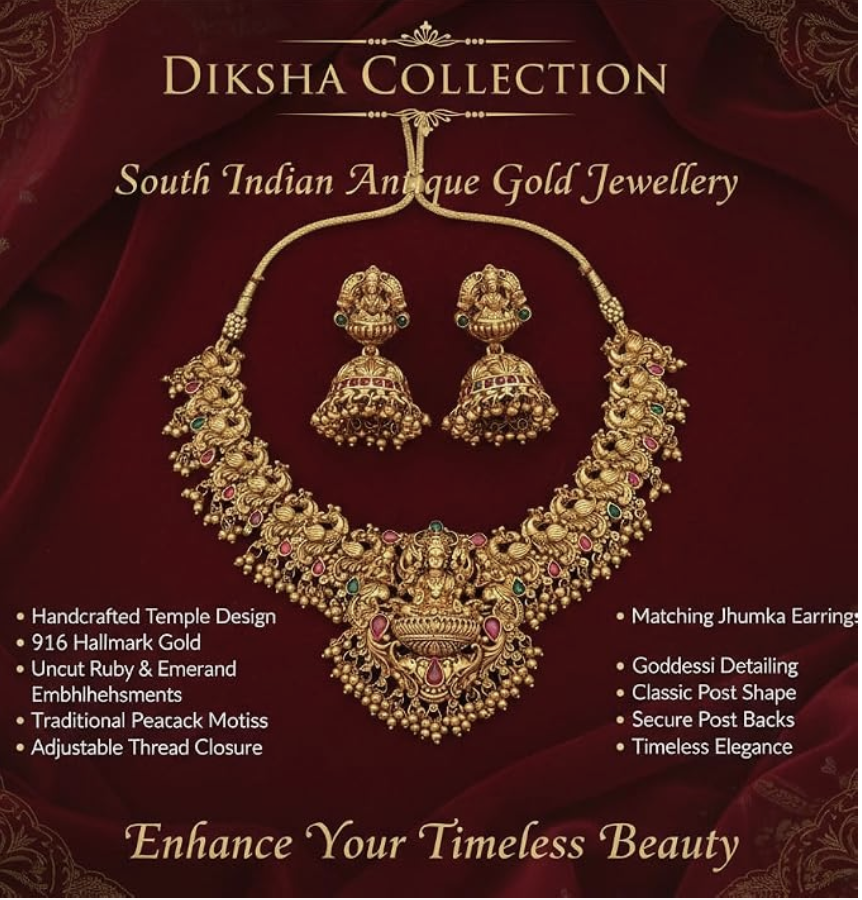
Traditional Antique Gold Plated Goddess Lakshmi Temple Jewelry Necklace Set with Matching Jhumka Earrings | Kemp Stone Ethnic Choker for Women and Girls | South Indian Bridal Jewelry | Bridal Set for Women
3. The 3 Forensic Home Tests to Run Before Wearing Fake Jewelry
If you received an imitation necklace set from an online sale, perform these 3 fast checks before putting it against bare skin:
Test 1: The Neodymium Magnet Test
- Take a strong neodymium magnet (from an old headphone driver, fridge magnet, or tool kit).
- Bring it close to the central pendant and choker segments.
- High-Grade Brass / Copper / Real Silver: Completely non-magnetic. The necklace will not move or stick.
- Cheap Scrap Iron / Heavy Nickel Core: The necklace will immediately snap to the magnet. If your "brass" choker sticks firmly to a magnet, it contains heavy ferrous scrap and nickel filler that will cause skin allergies.
Test 2: The Lemon Juice Acid Drop Test (Hidden Reverse Side)
- Turn the necklace over to the flat reverse side that touches your neck.
- Place one tiny drop of fresh lemon juice (citric acid) onto the back of a link using a toothpick.
- Wait 5 minutes, then wipe it off with a white cotton swab.
- Pass (Quality E-Coated Micro Gold): The swab comes away clean; the metal maintains its uniform matte finish without tarnishing.
- Fail (Cheap Flash Dye): The swab turns murky green or black, and the gold finish dissolves to reveal raw grey pot-metal underneath.
Test 3: The Stone Solvent / Alcohol Swipe Test
- Take a cotton earbud dipped in rubbing alcohol or standard nail polish remover (acetone).
- Gently rub the surface of one red "kemp stone".
- If red color bleeds onto the cotton bud, the stone is painted plastic with surface dye that will transfer onto your silk saree or blouse neckline during festive wear.
4. The 60-Second "Jewelry Shield" Hack for Budget Sets
If you love the aesthetic of a budget set and want to wear it safely without turning your neck green:
- Thoroughly clean the reverse side with a dry microfiber cloth.
- Apply two generous coats of clear, transparent nail enamel (topcoat) or a jewelry protective barrier spray across the entire underside of the choker and earring posts.
- Let it dry completely for 4 hours.
- This creates a transparent, non-reactive physical acrylic barrier between your skin's sweat glands and the copper-nickel core, preventing verdigris oxidation and allergic flares.
Lab Recommendations & Accessories Tools
To choose stunning, skin-safe festive jewelry that lasts beyond a single celebration:
- Live Multi-Store Price Comparison Engine: Compare verified temple jewelry, bridal chokers, and festive sets across Amazon, Meesho, and Myntra.
- Accessories & Jewelry Catalog: Discover curated, skin-friendly necklaces, bangles, and festive adornments.
- The ₹999 Pure Kanjivaram Silk Scam: Read our textile lab investigation on how to spot synthetic polyester sarees during festival shopping.