
The ₹349 "Viscose Rayon" Kurti Illusion: Why That Summer Office Top Loses 50% Wet Strength and Shrinks 2 Sizes in Water
Printed short kurtis and daily tunic tops made from "100% Viscose Blend" look exceptionally soft, fluid, and breathable on Myntra and Meesho. But viscose is regenerated wood pulp cellulose with a fatal chemical flaw: it loses nearly half its tensile strength when wet and undergoes dramatic shrinkage if un-sanforized. Here is how budget mills save 8% fabric yield at your expense—and 3 tests to run before cutting tags.
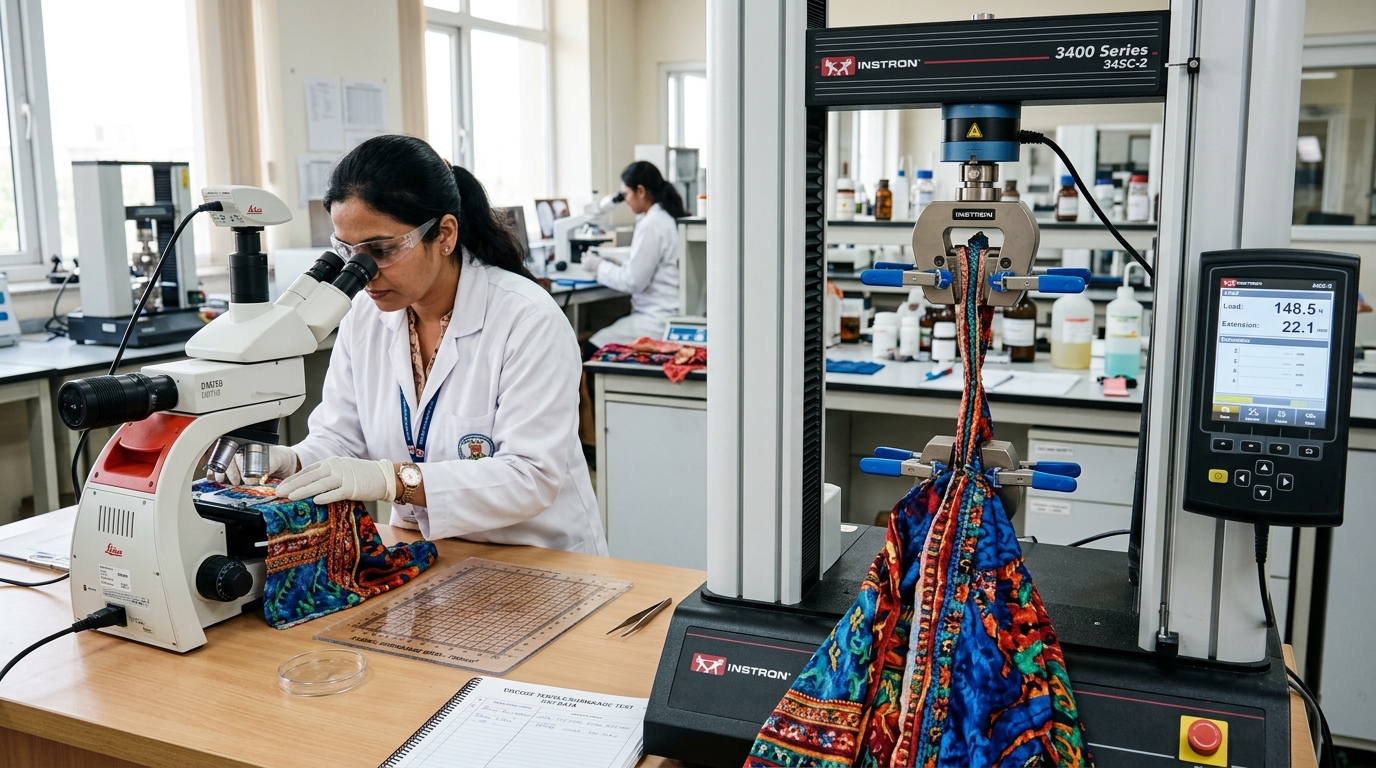
For millions of working women, college students, and daily commuters across India, the search for the perfect everyday summer work top leads to the same fabric: Viscose Rayon.
Online fashion stores like Myntra, Ajio, and Meesho feature endless catalogs of printed short kurtis, straight-fit ethnic tops, and casual office tunics priced between ₹299 and ₹449:
- "Women's Viscose Blend Floral Printed Straight Kurti"
- "Ultra-Soft Breathable Fluid Drape with Square Neck & Full Sleeves"
- "Perfect for Daily Office, College & Casual Festive Wear"
- MRP: ₹1,499 ➔ Daily Deal Price: ₹349 (76% OFF)
Fresh out of the packaging, the kurti feels heavenly. Unlike stiff unwashed cotton, viscose has an exquisite, silky hand-feel, a flattering fluid drape that hugs the body naturally, and a subtle sheen that makes digital floral prints pop with rich saturation.
Then comes Laundry Day Number One.
You dip the kurti into a bucket of water mixed with gentle liquid detergent. The moment the fabric gets soaked, it suddenly feels bizarrely heavy, stiff, and rough—almost like wet cardboard. You hang it up to air dry in the shade.
When you try it on the next morning:
- The hemline that comfortably grazed your mid-thigh now sits 2.5 inches higher above your hips.
- The square neckline and shoulder seams have puckered into wavy, distorted ripples.
- Pull gently on the side seam, and the stitching threads pull right through the fabric, tearing tiny vertical holes along the stitch line.
How can a garment that felt like luxury silk in the box turn into a ruined rag after a single 15-minute hand soak?
The answer lies in The Molecular Chemistry of Regenerated Cellulose and Skipped Sanforization.
1. The Science of Viscose: Why Water Breaks Cellulose Bonds
Unlike natural cotton (which actually becomes 20% stronger when wet due to hydrogen bonding alignment in pure cotton fibril bundles), Viscose is a semi-synthetic regenerated cellulose fiber derived from wood pulp (pine, eucalyptus, or bamboo):
- During industrial viscose manufacturing, wood cellulose is dissolved in sodium hydroxide and carbon disulfide, then extruded through tiny spinneret nozzles into an acid bath to regenerate filaments.
- This process produces fibers with lower crystalline orientation and high amorphous cellulose regions.
- When dry, viscose has respectable tensile strength. But the moment water molecules penetrate the fiber matrix, they disrupt internal hydrogen bonds:
- Dry Tensile Tenacity: ~2.2 to 2.6 grams per denier.
- Wet Tensile Tenacity: Plunges down to 1.1 to 1.4 grams per denier (a 45% to 55% loss in physical strength).
When a wet viscose kurti is heavy with water, the simple act of wringing it out by hand with a twisting motion snaps thousands of micro-filaments, causing seam slippage and permanent fiber distortion.
2. The Skipped Sanforization Trick (Saving 8% Fabric Yield)
The reason your kurti shrunk two full sizes in cold water is deliberate cost reduction at the fabric processing mill:
- Relaxation Shrinkage: When viscose yarns are woven under high mechanical tension on modern high-speed water-jet looms in Surat or Ahmedabad, the fibers are stretched like tight rubber bands.
- The Controlled Sanforization Process: In premium apparel manufacturing, finished grey fabric undergoes controlled mechanical compaction (sanforizing) and tensionless steam drying. This allows stretched fibers to relax and pre-shrink by 6% to 10% before patterns are cut and stitched.
- Budget Mill Cost Cutting: Sanforizing fabric costs money and reduces the total sellable fabric yardage by 8% to 10%. To hit a ₹349 retail price, budget mills skip pre-shrinkage entirely. They cut and stitch the garments while the fabric is still stretched to maximum tension.
- The very first time the kurti hits water, those stretched cellulose polymers snap back to their natural coiled state—shrinking your garment by 2 to 3 full inches in length.
Featured Ethnic Daily Wear: Straight-Fit Viscose Tuning
Here is how a verified straight-fit casual viscose blend kurti with modern square neckline and full sleeve styling operates in everyday wardrobe rotations:

Women’s Viscose Blend Printed Short Kurti | Straight Fit Casual Ethnic Top | Square Neck Full Sleeve Kurta Office College
3. The 3 Diagnostic Checks Before Cutting Tags
If you ordered a budget viscose kurti online, perform these three physical checks within your 7-day return period:
Check 1: The Steam Iron Shrinkage Sample Test
- Before washing the entire kurti or cutting tags, turn the garment inside out.
- Use a ruler to measure a precise 10 cm segment along the bottom inner hem.
- Set your household iron to the "Rayon/Silk" setting with steam.
- Hold the steam iron 1 cm above the measured hem segment and give it two generous bursts of steam for 10 seconds.
- Measure the segment again.
- Pass: Measures between 9.7 cm and 10 cm (minimal residual shrinkage below 3%).
- Fail: If the segment visibly shrinks to 9.2 cm or less under simple steam, the garment was stitched from un-sanforized greige fabric and will shrink dramatically in the bucket.
Check 2: The Seam Needle Cut Inspection
- Turn the kurti inside out and examine the side overlock seams and sleeve armhole stitching.
- Gently pull the fabric on both sides of the seam outward with moderate finger tension.
- Pass: Clean, tight stitches that stretch slightly without creating visible pinholes.
- Fail (Needle Cutting): If you see elongated, oval needle puncture holes where the sewing machine punctured the fabric, the factory used dull, thick sewing needles that severed the brittle dry viscose yarns during assembly. Under normal washing, the seam will split open along these perforation holes.
Check 3: The 30-Second Wet Tissue Crock Test
- Take a damp white cotton tissue or cotton earbud.
- Rub it firmly back and forth 10 times across a dark navy, black, or maroon printed area of the kurti.
- If color transfers heavily onto the white tissue, the fabric was printed using cheap direct dyes without proper steam fixation and cationic dye-fixing agents. It will bleed into your other laundry.
4. How to Properly Wash Viscose Without Ruining It
If you own viscose kurtis you love and want to preserve their fit and softness:
- Never Wring or Twist: Never wring wet viscose like you would a cotton towel. Gently squeeze water out between flat palms, or roll the kurti in a dry towel to absorb excess moisture.
- Never Tumble Dry: Machine dryers use hot dry air that permanently locks in thermal shrinkage. Always dry flat on a drying rack or on a padded hanger in the shade.
- Reshape While Damp: Gently pull the hemline and sleeves back to their original length while the fabric is still damp before hanging.
Lab Recommendations & Wardrobe Tools
To curate chic, long-lasting ethnic workwear without laundry surprises:
- Live Multi-Store Price Comparison Engine: Compare verified prices for kurtis, ethnic co-ord sets, and tunics across Myntra, Ajio, and Meesho.
- Women's Apparel & Ethnic Catalog: Discover curated pure cotton, linen blends, and pre-shrunk daily wear.
- The 10-Wash Cotton Reality: Read our textile lab investigation on bias cuts and off-grain side seam twisting in budget cotton wear.