
The ₹2,999 "4K 60FPS" Action Camera Scam: The Sensor Math That Ruins Ladakh Bike Trips & Underwater Dives
Budget action cameras flooding Amazon and Flipkart promise "Native 4K 60FPS Video, Dual Screens, and 30M Waterproofing" for ₹2,499. But inside is an ancient 2MP security camera sensor using software line-doubling that turns Himalayan bike tours into pixelated mud. Here is the optical sensor math, thermal shutdown reality, and how true 1/1.3" sensors like DJI compare.
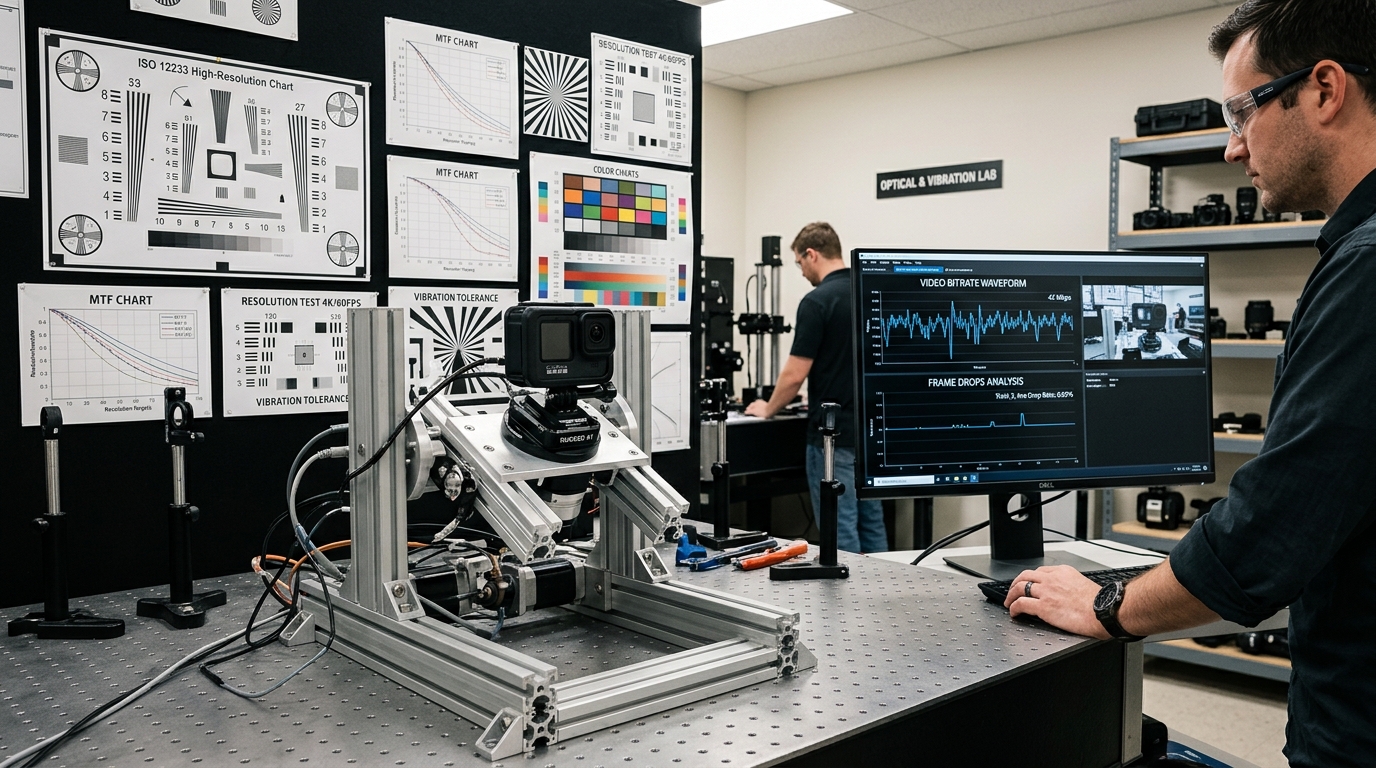
Every year between May and October, hundreds of thousands of Indian motorcyclists, backpackers, and travel vloggers prepare for the ultimate bucket-list adventure: the Manali-to-Leh highway, Spiti Valley, or scuba diving in the Andaman Islands.
Search queries on Amazon India and Flipkart for "action camera 4k 60fps waterproof" skyrocket. And right at the top of the search rankings, promoted with Amazon's Choice or Flipkart Assured badges, sit dozens of generic action cameras with aggressive pricing: ₹2,499 to ₹3,999.
The product renders look identical to a ₹35,000 GoPro Hero or DJI Osmo Action. The feature bullet points read like an optical engineering triumph:
- "Ultra HD 4K at 60FPS & 20 Megapixel Stills"
- "Dual Color Displays (Front Selfie Screen + Rear Touchscreen)"
- "Electronic Image Stabilization (EIS) with 6-Axis Gyro"
- "30M Waterproof Case & Helmet Mounting Accessories Kit Included"
- MRP: ₹9,999 ➔ Flash Deal Price: ₹2,899 (71% OFF)
To a first-time vlogger planning their mountain expedition, paying ₹3,000 for a camera that advertises the exact same resolution and frame rate as a flagship device seems like the deal of a lifetime.
Then you get onto the Khardung La pass at 17,500 feet.
You get back to your hotel tent, pop the micro-SD card into your laptop, and hit play on your helmet ride footage. The disappointment is crushing:
- The majestic snow-capped peaks are completely blown out into a blinding white glare, while the winding asphalt road is a muddy, underexposed black void.
- Every bump on the gravel road sends the video into sickening geometric warping (jello effect).
- Zoom in 100%, and the "4K" footage looks worse than an iPhone 6 video recorded through greaseproof paper.
- And the audio? A deafening, muffled roar of wind turbulence that drowns out your voice entirely.
How can a camera that claims 4K at 60 frames per second produce footage that looks worse than a 10-year-old smartphone?
The answer is Software Interpolation and Security Sensor Re-packaging.
1. The Sensor Math: The 2-Megapixel Security Camera Trick
To record true, uncompressed, optical 4K video (3840 × 2160 pixels), an image sensor must possess at minimum 8.29 million distinct physical photosites (8.3 Megapixels), paired with an image signal processor (ISP) capable of crunching roughly 1.5 gigabits of raw uncompressed pixel data per second.
In budget ₹2,999 action cameras, manufacturers use cheap OmniVision or GalaxyCore 2MP to 4MP sensors (costing roughly $1.50) originally designed for low-cost home CCTV security cameras:
- A 2-megapixel sensor physically captures only 1920 × 1080 (1080p) or even 1280 × 720 (720p) resolution.
- To output a "4K" file, the bottom-tier Allwinner or Sunplus processor executes Software Pixel Interpolation (Line Doubling). It takes each real pixel and duplicates it four times, guessing the missing color values.
- The resulting file has 3840 × 2160 container dimensions on your computer, but zero new optical detail exists. It is artificial digital grain stretched across a 4K canvas.
- The Bitrate Reality: Flagship cameras like the DJI Osmo Action 4 write video streams at 130 Mbps in 10-bit color. Budget knock-offs compress video at a pitiful 15 to 22 Mbps. In complex scenes with trees, moving water, or flying gravel, the compression encoder panics, resulting in massive macroblocking artifacts.
2. True Flagship Benchmark: The DJI Osmo Action 4
Here is how a genuine professional-grade action camera engineered for high dynamic range, freezing mountain temperatures, and underwater diving handles optical physics:
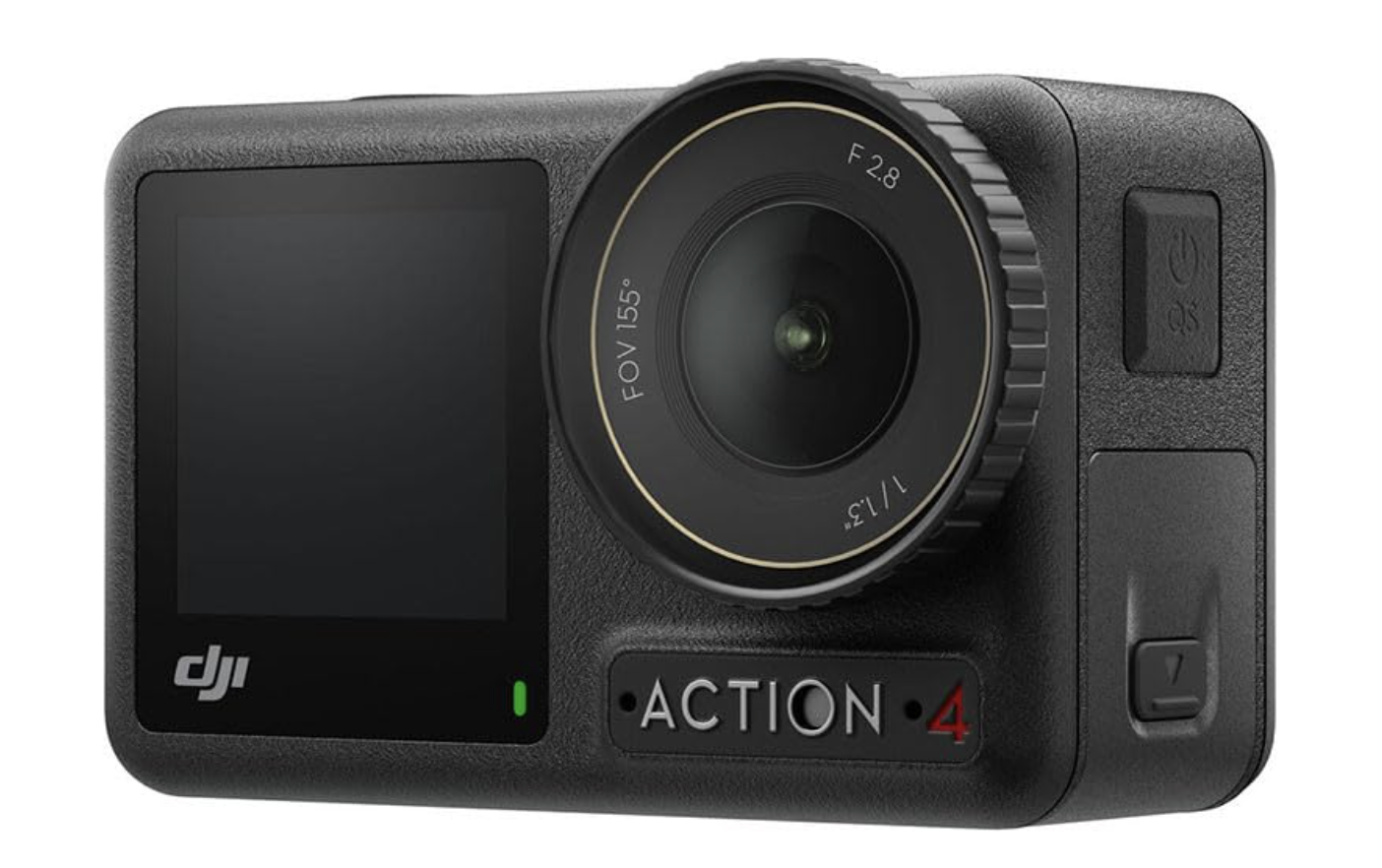
DJI Osmo Action 4 Standard Combo, Waterproof Action Camera Vlogging Camera
Notice the radical difference in optical architecture:
- Massive 1/1.3-Inch Image Sensor: Nearly 4 times larger than budget sensors. This allows individual sensor pixels to measure 2.4μm, capturing abundant light during dusk, dawn, and overcast mountain cloud cover.
- 10-Bit D-Log M Color Profile: Captures over 1 billion colors with 13.5 stops of dynamic range, preventing white mountain snow and dark tarmac from clipping into muddy extremes.
- RockSteady 3.0 & HorizonSteady 360°: Hardware-calibrated gyroscope algorithms that lock the horizon flat even if your motorcycle rolls 360 degrees on uneven mountain tracks.
3. Thermal Throttling & Indian Heat Shutdown
Action cameras generate immense internal heat because high-bitrate video processing is packed into a tiny, weather-sealed plastic shell without fans.
Flagship cameras feature magnesium-alloy heatsink bezels that conduct heat away from the processor into ambient air.
Cheap ₹2,999 cameras use 100% cheap polycarbonate shells:
- The moment you ride under the blazing Indian sun at 38°C in Rajasthan or the Deccan plateau, internal PCB temperatures exceed 75°C within 12 to 18 minutes.
- The budget chipset has no graceful thermal downclocking. It simply freezes mid-recording, corrupts your video file on the micro-SD card, and displays a "System Error" before shutting down completely.
4. The 3 Diagnostic Checks Before Your Travel Return Window Closes
If you bought an action camera online to test before your upcoming trip, perform these three physical checks within your 7-day return period:
Check 1: The MediaInfo Bitrate & Codec Inspection
Do not trust the label on the box. Inspect the digital stream:
- Record a 60-second clip of a leafy green tree swaying in the breeze while walking.
- Transfer the MP4 file to your PC or Mac and open it using the free utility MediaInfo.
- Look at Overall Bit Rate.
- Pass: 80 Mbps to 130 Mbps (H.264 / HEVC).
- Fail: If the overall bitrate is between 12 Mbps and 25 Mbps, the camera is using heavy compression on an upscaled 720p/1080p stream.
Check 2: The Jello & Gyro Horizon Test
- Mount the camera to a bike handlebar or hold it firmly in your hand.
- Rapidly twist your wrist back and forth by 45 degrees while walking down a flight of stairs.
- Watch the footage frame-by-frame on a computer monitor.
- Real Hardware Gyro EIS: The background moves smoothly without geometric distortion, maintaining horizontal orientation.
- Fake Digital EIS: The video image visibly warps, stretches at the corners like rubber (jello effect), and drops frames every time you step.
Check 3: The Cold Water Pressure Seal Audit
Before you risk your camera on a scuba dive or river rafting in Rishikesh:
- Take the clear waterproof housing (without the camera inside).
- Stuff the housing with a piece of dry blue tissue paper.
- Latch the waterproof clasp firmly and submerge the housing in a bucket of cold water under a 5kg dumbbell for 30 minutes.
- Pull it out, dry the exterior thoroughly with a towel, and open the clasp.
- If the blue tissue has a single damp spot, the silicone o-ring seal has imperfect manufacturing tolerances. Never put an electronic camera inside it.
Lab Recommendations & Gear Tools
Before investing in your travel and vlogging gear:
- Live Multi-Store Price Comparison Engine: Real-time price tracking for action cameras, vlogging kits, and travel accessories across Amazon and Flipkart.
- Electronics & Gadgets Catalog: Explore handpicked, verified video recording equipment.
- The ₹1,499 ANC Earbuds Lie: Read our audio hardware investigation on how budget audio brands cut similar corners with fake decibel metrics.