
The ₹1,799 "Festive Embroidered Sharara" Reality: The Thread-Tension & Flare Math That Separates Fast-Fashion Dupes from Heirloom Sets
Festive sharara and gharara sets with heavy zari embroidery and sequins look royally opulent on festive marketplace campaigns at ₹1,599 to ₹1,999. But high-speed multi-head computerized embroidery machines running cheap synthetic metallic lurex over thin micro-georgette lead to puckered chest panels, itchy inner scratch seams, and skimpy 1.5-meter flares. Here is the embroidery engineering breakdown and 3 checks before your sangeet night.
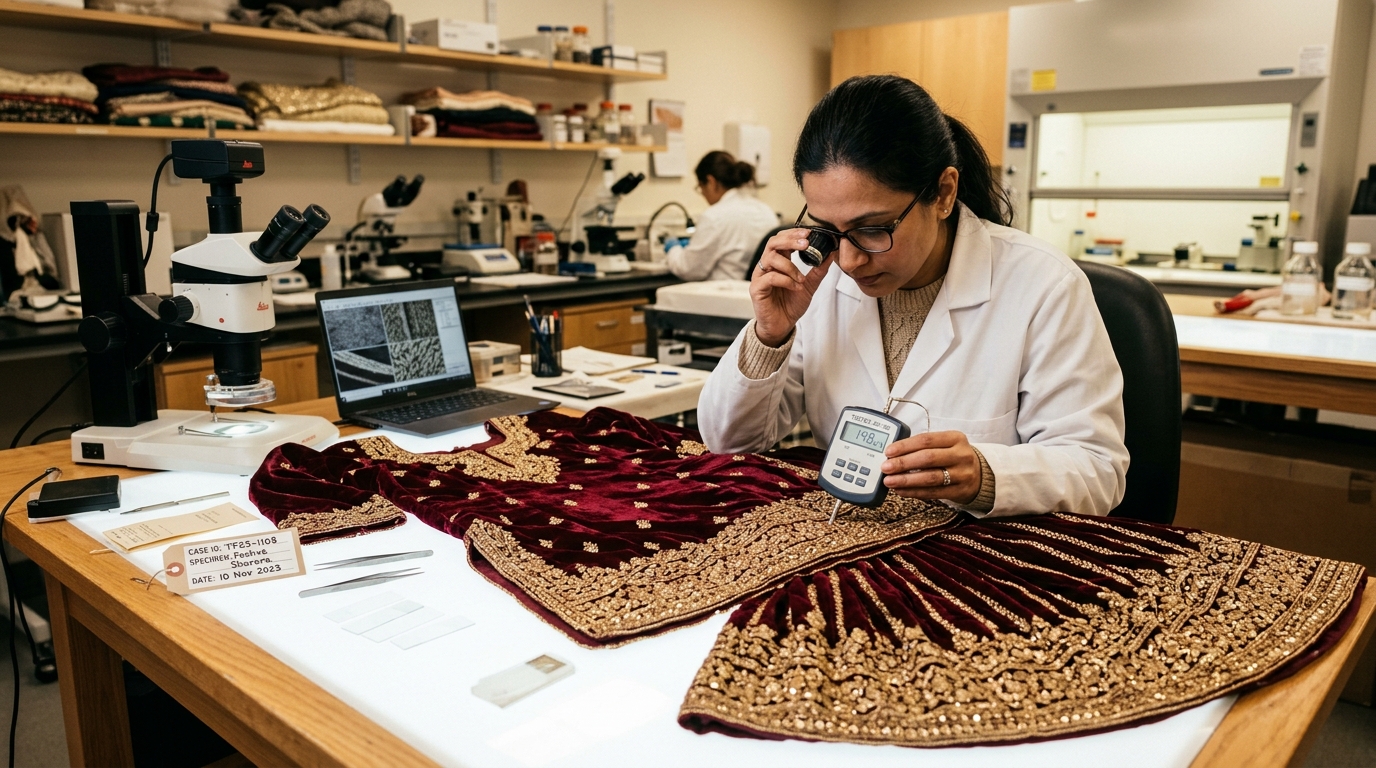
When the wedding and sangeet season arrives across India, traditional flared ethnic silhouettes—specifically Sharara and Gharara sets with sweeping flared tiered pants and intricately embroidered kurtas—command the center of festive fashion wishlists.
E-commerce portals like Myntra, Ajio, and festive bridal boutiques promote gorgeous festive sets with jaw-dropping discounts:
- "Women Ethnic Motifs Embroidered Kurta with Flared Sharara & Dupatta Set"
- "Heavy Zari Threadwork with Mirror-Style Sequins & Scalloped Zari Borders"
- "Crafted in Flowing Georgette with Comfortable Elasticated Waistband"
- MRP: ₹6,999 ➔ Festive Deal Price: ₹1,799 to ₹2,199 (70% OFF)
In studio promotional photos, the model twirls with breathtaking grandeur. The flared sharara pants billow like an umbrella with what appears to be a 3-meter circumference per leg. The heavy golden embroidery on the kurta chest looks richly dense, regal, and flawless.
Then delivery day arrives, and you try on the set for your sangeet rehearsal.
Within minutes:
- The kurta chest panel doesn't lie flat across your bust. Instead, the embroidered area is stiff, tight, and puckered like corrugated cardboard, pulling the neckline into awkward bunches.
- The inner reverse side of the embroidery feels like a prickly cheese grater against your bare skin. Stiff nylon backing threads and sharp plastic sequin knots scratch your chest and shoulders, leaving red, irritated wheals.
- You attempt the dramatic Bollywood twirl in front of your bedroom mirror—only to find the sharara legs are cut so skimpy that they barely have 1.2 meters of flare per leg, hanging flat and limp like pajamas.
How can a garment boasting heavy zari work feel so uncomfortable to wear?
The answer lies in Embroidery Machine Thread Tension, Skimped Meterage, and Non-Woven Backing Paper.
1. The Embroidery Machine Shortcut: Thread Tension vs Fabric Puckering
In high-end heirloom ethnic embroidery (such as authentic Zardozi or precision slow-speed multi-head embroidery):
- The base fabric (chiffon, silk, or high-twist georgette) is held under uniform bi-directional drum tension on wooden frames.
- The embroidery machine operates at slow speeds (below 450 stitches per minute) with synchronized upper and lower bobbin tension, ensuring that dense metallic threads do not pull the delicate base fabric threads together.
In fast-fashion ₹1,799 festive sets manufactured in high-output Surat garment units:
- Multi-head computerized embroidery machines are run at blistering speeds exceeding 900 to 1,100 stitches per minute.
- Because the base fabric is ultra-thin 50-GSM polyester micro-georgette, the high-speed needle punches pull the base fabric threads inward (needle thread puckering).
- To prevent the machine needles from tearing the flimsy georgette during high-speed sewing, factories place cheap, stiff non-woven recycled paper backing (fusible fleece) underneath the entire chest panel.
- Instead of peeling this backing off after stitching, budget factories leave the stiff paper backing permanently stitched inside the kurta. Under body heat and sweat, the paper backing hardens into an unyielding, cardboard-like shield that scratches your skin and prevents the fabric from draping naturally.
2. The Flare Math: 3.0 Meters vs 1.2 Meters
The defining beauty of a traditional sharara is its flare volume (gher):
- A genuine royal sharara requires at minimum 2.5 to 3.5 meters of fabric circumference per individual leg, allowing the tiered pleats to flare dramatically when moving or dancing.
- In budget sets, fabric yardage is the primary cost driver. To keep costs low, manufacturers cut the leg flares down to an anaemic 1.2 to 1.5 meters per leg. When worn, the trousers lose their sweeping flared elegance entirely, looking more like loose pajamas with a gathered knee band.
Featured Regal Craftsmanship: The Pataudi Ethnic Sharara
Here is how a verified festive regular kurta with authentic tiered sharara flare, balanced thread tension, and coordinated dupatta borders executes royal heritage aesthetics with comfortable inner lining:
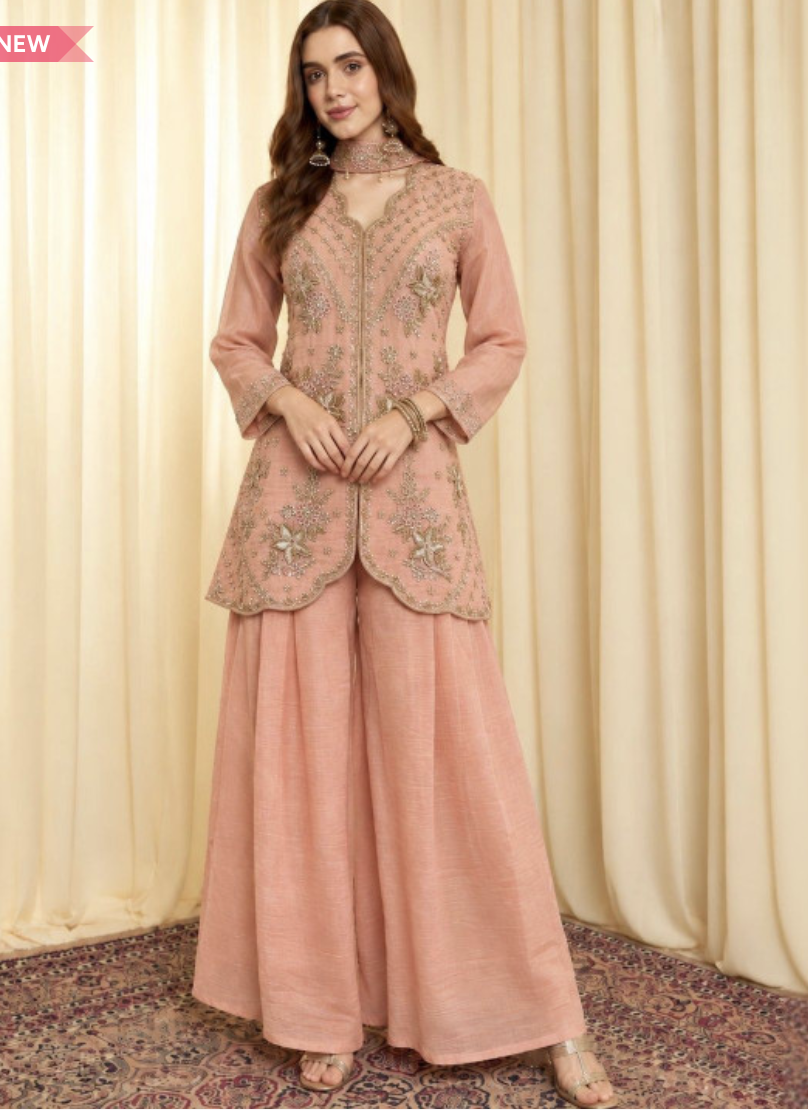
Women Ethnic Motifs Embroidered Regular Kurta with Sharara & With Dupatta
3. The 3 Diagnostic Checks Before Wearing for Sangeet Night
Before you commit to wearing a new sharara set to an important family wedding, run these three physical checks within your 7-day return period:
Check 1: The Inner Reverse "Scratch & Paper" Inspection
- Turn the embroidered kurta completely inside out under good room lighting.
- Run your bare forearm and palm firmly across the reverse side of the heavy chest embroidery.
- Pass: The embroidery reverse is lined with a soft, breathable cotton/mulmul lining (astar), or backing threads are soft and trimmed flush without protruding hard plastic burrs.
- Fail: The reverse feels stiff, abrasive, and scratchy like fine sandpaper, or you see large sheets of white non-woven paper glued and stitched behind the zari. If it scratches your forearm during a 10-second rub, it will cause unbearable itching during a 4-hour sangeet party.
Check 2: The Physical Sharara Flare Measurement
- Lay one sharara leg flat on the floor.
- Take a standard measuring tape and measure the straight bottom hem width from side to side.
- Multiply that number by 2 to get the total circumference per leg.
- Royal Flare: Minimum 200 cm to 280 cm (2.0m to 2.8m per leg).
- Skimped Fast-Fashion Cut: Below 140 cm (1.4m per leg). If the flare is under 1.5 meters, the sharara will not produce the voluminous silhouette seen in online promotional photographs.
Check 3: The Kurta Flat Lay Puckering Test
- Lay the kurta completely flat on an unmade bed or floor without pulling or stretching.
- Look at the chest embroidery from eye level.
- Pass: The embroidered panel lies perfectly flat and smooth, flush with the unembroidered sleeves and waist.
- Fail: The embroidered chest area curls upward, creating ripples, bubbling bumps, and pulled neckline puckers. If it bubbles while lying flat on a bed, it will bunch awkwardly when worn over your bust.
Lab Recommendations & Ethnic Wedding Tools
To choose regal, comfortable festive wear that looks majestic in wedding photography:
- Live Multi-Store Price Comparison Engine: Real-time price tracking on designer shararas, lehengas, and ethnic wedding sets across Myntra, Nykaa Fashion, and Ajio.
- Women's Festive & Ethnic Catalog: Discover curated heirloom embroidery, cotton shararas, and silk festive sets.
- The ₹999 Kanjivaram Silk Scam: Read our textile lab investigation on metallic lurex flaking and burn test verifications.