
The ₹1,299 "Pure Linen" Illusion: Why That Summer Shirt on Myntra Feels Like Wet Cardboard After Two Washes
You paid ₹1,399 for a "100% Linen" shirt on Myntra or Ajio, but after two bucket washes, it wrinkles like crushed foil, clings like plastic wrap in humidity, and feels like coarse burlap. Here is how budget brands blend cheap viscose tow and chemical softeners to mimic European flax—and the 30-second tests to run before cutting tags.
Every summer in India, online fashion portals see a predictable surge: searches for "pure linen shirts for men" and "linen trousers" shoot up by over 300%. The aesthetic is irresistible—effortless pastel neutrals, relaxed rolled-up cuffs, and that breezy coastal drape that looks like a weekend in Goa or Lake Como.
And with listings on Myntra, Ajio, and Amazon slashed from a fictional MRP of ₹3,499 down to an irresistible ₹1,199 or ₹1,499, it feels like an absolute bargain.
Then comes the real test: wearing it on an actual humid Indian afternoon and running it through your home laundry.
By wash two, the illusion shatters. Much like the starch-sizing shortcuts uncovered in our 10-wash cotton apparel investigation, the fabric doesn't soften into that buttery, heirloom drape you were promised. Instead, it dries stiff, brittle, and board-like—resembling soaked cardboard. When you step outside into 34°C heat with 70% humidity, rather than breathing and wicking sweat away, it sticks flush against your back like cling wrap. And across the chest and armpits, rough, prickly fibers start itching against your bare skin.
If you thought you just had bad luck or bought the "wrong brand," think again. You were sold an engineered chemical disguise. Here is how budget fast-fashion labels fake linen's texture, why raw material math makes a ₹1,299 pure linen shirt physically impossible, and the simple non-destructive tests you can run in 30 seconds before cutting off the price tags.
The Raw Material Math: Why a ₹1,299 "Pure Linen" Shirt is Financially Impossible
To understand the scale of the compromise, you only need to look at wholesale textile commodity prices in Surat, Bhiwandi, and Tirupur.
True linen is spun from flax (Linum usitatissimum), a finicky bast crop grown primarily in the damp, temperate climates of Northern France, Belgium, and the Netherlands. Harvesting long-staple flax requires pulling the entire stalk from the roots, retting it in open fields for weeks so microbes loosen the pectin gum, and mechanical scutching to separate the long, silky inner fibers.
Here is what it costs to produce real woven apparel fabric today:
- European Long-Staple Flax Yarn (60 Lea to 70 Lea): Trades at ₹1,800 to ₹2,400 per kilogram wholesale.
- Finished 100% Linen Fabric (140–160 GSM): Costs approximately ₹550 to ₹750 per running meter at mill gates in Gujarat or Tamil Nadu.
- Fabric Requirement for One Full-Sleeve Adult Shirt: Minimum 1.6 to 1.7 meters (accounting for pattern matching, collar band fusing, and cutting wastage). That is ₹900 to ₹1,200 in raw fabric alone.
Now add standard production economics:
- High-grade mother-of-pearl or resin buttons + interlining + core-spun thread: ₹60–₹80
- CMT (Cut, Make, Trim) stitching labour: ₹120–₹160
- Garment enzyme washing + pressing + hangtags: ₹50
- GST on apparel (5%): ~₹60
- Platform marketplace commission (Myntra/Ajio take 22%–28%): ~₹350
- Return logistics buffer (Indian fashion e-commerce averages a brutal 30%–38% return rate): ~₹120
- Packaging + forward courier: ~₹80
Total break-even cost to sell a genuine pure linen shirt: at least ₹1,850 to ₹2,100.
So how does a brand sell you a shirt for ₹1,199 on sale—while still making a 30% net profit? They don't use long-staple flax. They use an industry shortcut called Flax Tow blended with high-denier Viscose or Slub-Spun Polyester.
The Three Manufacturing Tricks That Fake the "Linen Feel"
1. The "Flax Tow" Byproduct Trick
When flax stalks are combed to extract long, silky fibers (the "line flax" reserved for genuine high-end suiting and luxury shirting), the leftover waste consists of short, prickly, irregular stubble. In the textile trade, this scrap material is called flax tow.
Tow cannot be spun into fine yarn on its own—it is too brittle and snaps. But budget mills blend 15% to 20% of this scratchy waste fiber with cheap, mass-produced viscose (regenerated wood pulp) or polyester.
The viscose provides artificial drape and a smooth initial touch in the showroom. The discarded flax tow creates those visible, bumpy thick-and-thin irregularities known as "slubs."
When an unsuspecting buyer opens the package, they see those bumpy slubs on the weave and think: "Ah, look at those natural irregularities—this is definitely authentic handloom linen!" In reality, those slubs are low-grade manufacturing debris.
2. The Wash-Off Silicone Emulsion Dip
If you felt raw flax tow blended with viscose in its natural state, it would feel like rough burlap sacking. To fool your fingers on delivery day, garment finishers soak the stitched shirts in a heavy chemical bath of amino-functional silicone softeners and cationic lubricants.
This microscopic polymer coating wraps around each abrasive yarn, giving the shirt an unnaturally slippery, silky "butter" feel right out of the plastic polybag.
The catch? Silicone softening agents are water-soluble. They survive exactly one or two washes in your home washing machine with ordinary detergent. Once the chemical film strips away in the wash bucket, the true underlying fiber is exposed—stiff, jagged, and intensely scratchy against your skin.
3. The "Wet Tensile Collapse" (Why It Dries Like Cardboard)
Genuine linen is one of the only natural fibers on Earth that actually becomes up to 20% stronger when wet. Flax fibers contain crystalline cellulose fibrils that lock together under moisture, which is why an authentic heirloom linen garment can survive 100 machine washes and feels softer every single year you own it.
Viscose and rayon behave in the exact opposite manner: they lose 40% to 50% of their tensile strength the moment water hits them.
When submerged in a wash cycle, the chemically reconstituted cellulose fibers swell up, absorb water into their amorphous regions, and structurally deform. When dried under the Indian sun, the collapsed fibers set into rigid, unyielding planes. That is why your budget shirt feels cardboard-hard until you blast it with steam for fifteen minutes.
How Product Listings Legally Deceive You
Take a close look at how marketplaces format their search tags:
Platform Title: "Men Beige Solid Casual Linen Shirt"
Filter Applied: Fabric -> Linen
You assume you're getting pure linen. But scroll all the way down past the reviews, past the size guide, and expand the small grey accordion titled "Product Details" or "Material & Specifications":
- Fabric: Linen Blend
- Detailed Composition: 65% Viscose, 20% Cotton, 15% Linen (or sometimes "100% Cotton-Linen Look")
Under Indian consumer protection and legal metrology standards, marketplace titles are frequently defended by retailers as "descriptive styling keywords" (referring to the aesthetic look of the weave). The only legally binding declaration is the tiny printed composition wash-care label stitched into the lower inside left seam of the actual garment.
Brands know that 98% of online shoppers look only at the model photo, glance at the five-star aggregate rating, and snip the tags off the moment it fits in the mirror.
The 4 Non-Destructive Tests to Run Within Your 7-Day Return Window
You don't need a textile spectrometer to verify what you bought. The moment your parcel arrives from Myntra, Ajio, or Amazon, perform these four checks before snipping the price tag:
Test 1: The 2-Second Capillary Water Drop Test
Real flax fibers are hollow microscopic tubes with natural capillary action designed to wick moisture almost instantly.
- Lay the shirt flat on a dry table.
- Using the tip of your finger or a clean teaspoon, place a single tiny droplet of room-temperature water on the chest panel.
- Observe what happens:
- True Linen: The water droplet will flatten and penetrate into the yarns within 1.5 to 2 seconds, spreading outward in a clean, round circular bloom.
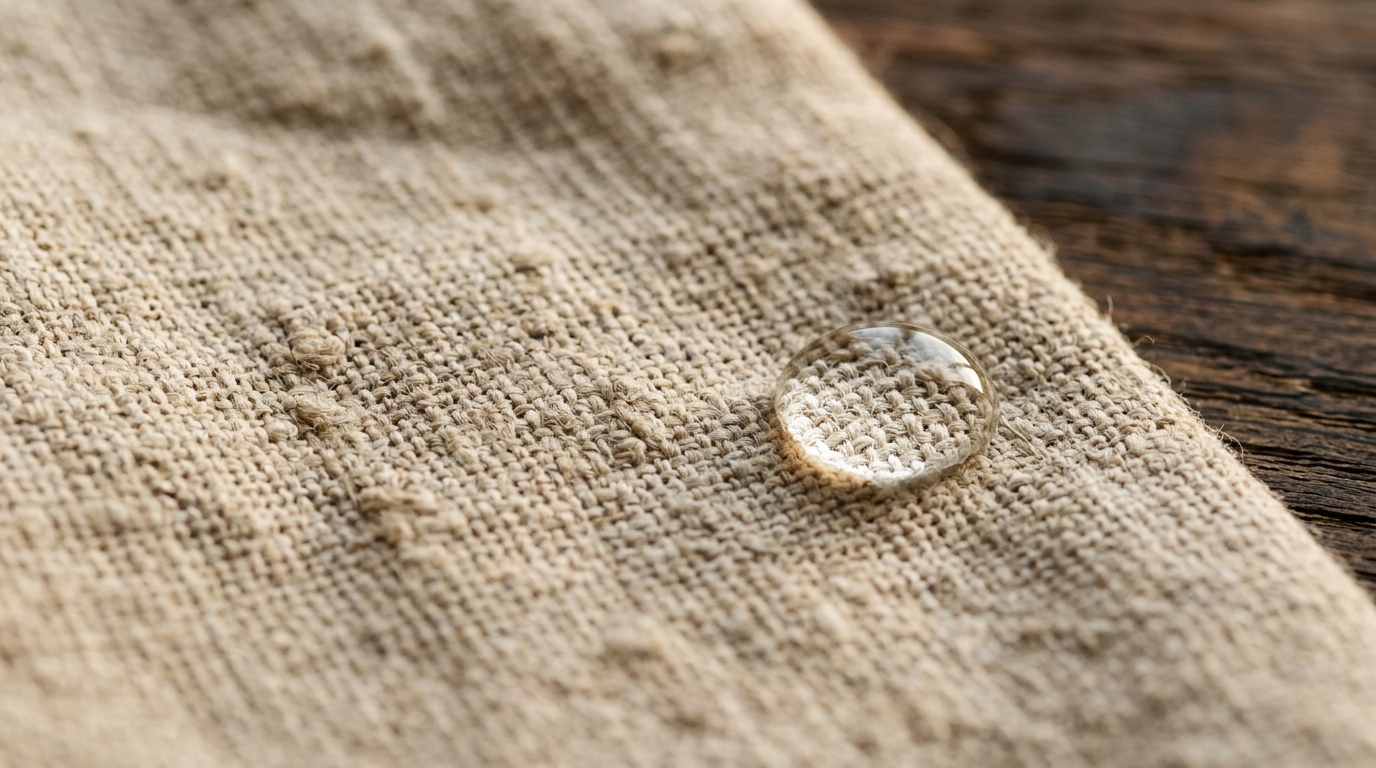
- Silicone-Coated or Poly-Blend Fabric: The droplet will sit rounded like a bead on top of the fabric for 15 to 30 seconds without absorbing, held up by chemical surface tension or hydrophobic synthetic fibers.
Test 2: The Fist Compression "Crease Rebound" Test
One of linen's most celebrated traits is that it wrinkles. But how it wrinkles reveals its molecular composition.
- Grab a handful of the shirt's lower front panel and clench it tightly in your fist for exactly 10 seconds.
- Release your hand and let it fall:
- True Flax Linen: Forms distinct, crisp, sharp, geometric creases. The fabric retains its structure and springiness—it does not collapse into a limp, floppy puddle.
- Viscose Blend: Forms soft, messy, accordion-like wrinkles with rounded edges that look like crumpled facial tissue. Viscose has zero natural fiber elasticity, so the crushed areas look deflated rather than structured.
Test 3: The Spare Button Thread "Burn Test"
Every branded shirt comes with an extra spare button stitched to the inner care tag using 2 to 3 inches of the exact same sewing or loomed thread. You don't need to cut the garment itself; simply snip 1 centimeter of that excess thread from the spare button loop.
Hold the thread with a pair of metal tweezers over a ceramic mug or sink, and bring a match or lighter flame close to the tip:
- 100% Linen or Cotton: It catches fire cleanly with a steady yellow flame, gives off the familiar scent of burning wood, dry autumn leaves, or paper, and leaves behind light, powdery grey ash that crumbles into absolute dust between your fingertips.
- Polyester / Nylon Blend: The thread immediately melts and curls backward away from the flame, emits a harsh, sweet, chemical celery odor or acrid black smoke, and leaves a hard, round black plastic bead that refuses to crush between your fingers.
- Viscose / Rayon: Burns very quickly with a pungent burnt-wood pulp smell and leaves almost no ash, but if blended with synthetic filaments, will produce gummy residues.
Test 4: The Reverse-Side Seam Sheer Test
Hold a single layer of the fabric directly against your phone's flashlight in a dark room:
- Look at the thread grid. True linen yarns have a natural, lustrous cylindrical sheen under direct light, with subtle variations in thread diameter that flow seamlessly into one another.
- Fake linen uses flat, dull synthetic or viscose yarns with abrupt, fuzzy little knots spliced in artificially to mimic slubs. If the slub bumps appear at suspiciously regular intervals—say, repeating in a diagonal pattern across the chest every 6 inches—it was woven on a cheap mechanical dobby loom programmed to fake handloom irregularities.
If You Already Own One: The Damage Control Laundry Protocol
If you have a budget linen-blend shirt that you genuinely like the cut of, here is how to keep it wearable without turning it into sandpaper:
- Ditch Powder Detergents Completely: Powder detergents like Surf Excel or Ariel contain alkaline builders (sodium carbonate) with an abrasive pH of 10 to 11. They strip fibers aggressively. Always use a gentle, neutral liquid detergent (such as Genteel or Ezee) or a mild wool-safe liquid.
- Never Wring or Spin on High: High-speed spin cycles in a top-load washing machine twist weakened wet viscose fibers until the microscopic bonds snap. Take the shirt out while dripping wet, gently sandwich it between a clean bath towel to press out excess water, and hang it on a broad contoured hanger in the shade.
- Iron While 15% Damp on the Reverse: Don't let the shirt dry bone-dry before ironing. Press it while the fabric is still slightly cool and moist, using your iron's medium-high steam setting on the inside surface. This relaxes the flattened cellulose fibers and restores a supple hand-feel without burning the face of the fabric.
The TechieBugs Bottom Line
Linen is an incredible fabric for the Indian subcontinent—naturally antimicrobial, thermo-regulating, and exceptionally durable. But authentic quality has an inescapable production floor.
If you are shopping online, treat anything under ₹2,200 labeled "100% Linen" with healthy skepticism. Check the inner fabric composition breakdown before removing the tags, run the 2-second water droplet test, and don't let budget brands pass off chemically disguised wood pulp for European flax.
Related Buying Guides & Comparison Tools
- 👗 Ethnic Wear Teardown: The 10-Wash Reality: How to Tell if an Online Cotton Kurta or Skirt Will Survive Laundry
- 🎧 Electronics Teardown: The ₹1,499 "45dB ANC" Earbuds Lie: Why Budget Pairs Can't Even Silence a Ceiling Fan
- 👔 Men's Verified Catalog: Browse Verified Men's Apparel & Genuine Cotton/Linen Shirts
- ⚖️ Multi-Store Spec Matcher: Compare Live Prices on Amazon, Flipkart & Meesho
- 🏷️ Instant Coupon Discounts: Check Today's Verified Loot Drops & Deals