
The Wall-Mounted Metal Shoe Rack Guide: Why Cheap Sheet Metal Bends, Rallies Dust, and Pulls Out of Indian Apartment Drywalls
Wall-mounted slim steel shoe racks are the #1 space-saving furniture piece across space-starved apartments in Mumbai, Bangalore, and Gurgaon. But paper-thin 24-gauge tinplate, uncertified linkage rivets, and weak 1-inch plastic wall plugs can lead to catastrophic wall tear-outs under a 30kg family shoe load. Here is the structural engineering breakdown and 3 checks before drilling your wall.
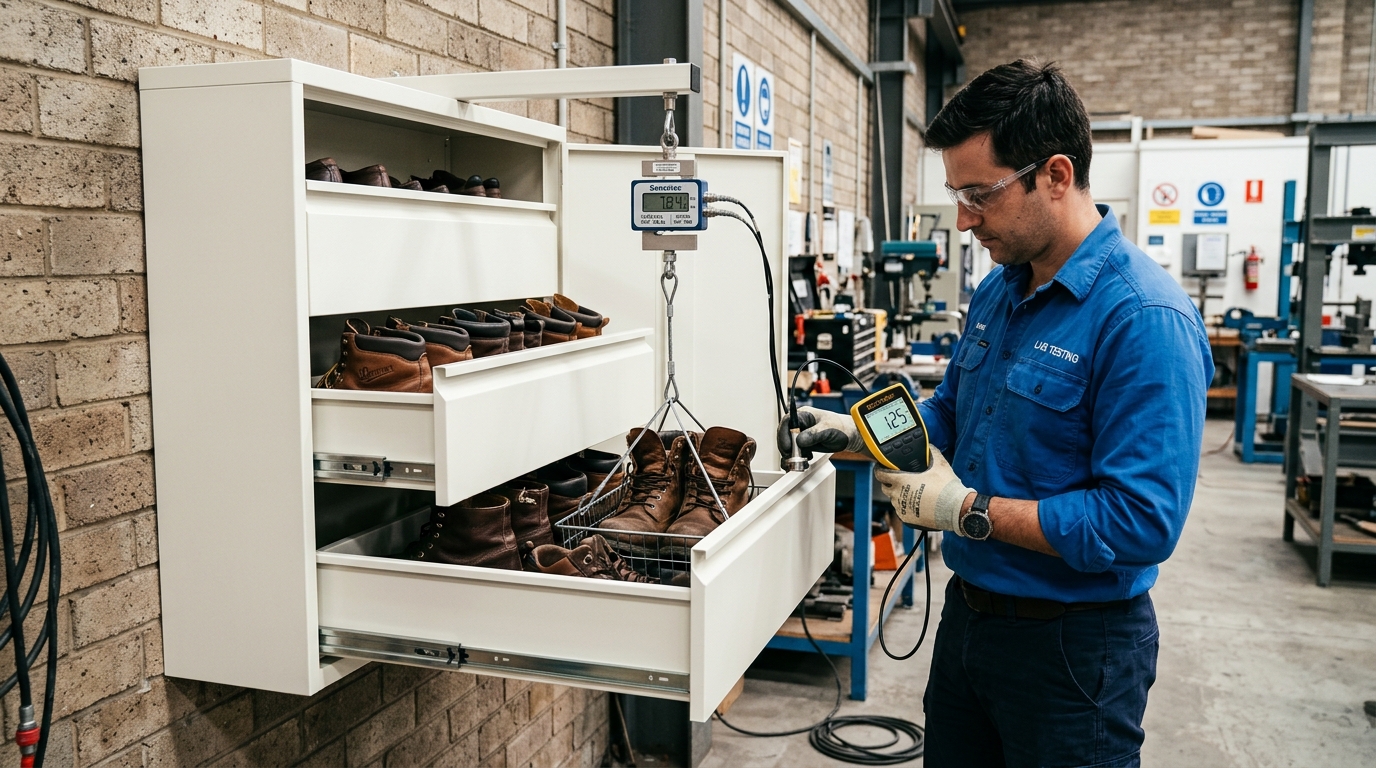
If you live in a modern 2BHK or 3BHK flat in Mumbai, Bengaluru, Pune, or Gurgaon, your apartment entryway presents an immediate spatial puzzle: you have a narrow 3-foot foyer corridor, zero floor space, and 12 to 18 pairs of footwear belonging to three family members.
Traditional wooden shoe cabinets are bulky, 15 inches deep, and block entryway doors.
That is why wall-mounted slim metal shoe racks have exploded into one of the highest-volume home furniture categories across Amazon India and Flipkart:
- "Wall-Mounted Heavy-Duty Steel Shoe Cabinet with Central Locking System"
- "Ultra-Slim 5.5-Inch Depth with 3, 4, or 5 Simultaneous Opening Shelves"
- "Rust-Proof Epoxy Powder Coated Finish with 3-Year Warranty"
- MRP: ₹7,999 ➔ Festive Deal Price: ₹2,999 to ₹4,499 (50% OFF)
The appeal is undeniable: mounted on the wall just 5 inches deep, all shelves open together simultaneously with a smooth pull of the top handle. Footwear is tucked away vertically behind closed steel doors, safe from dust and stray pets.
Then comes Month Three.
You pull the top handle to retrieve your running shoes, and the doors jam halfway with a harsh metallic screech. The sheet metal shelves have sagged under the weight of three pairs of heavy leather boots. Worse, you look at the top mounting bracket and feel a knot of panic: the top two plastic wall screws have pulled half an inch out of your hallway wall, leaving a growing crack in the plaster.
Why do budget metal shoe racks fail under normal household footwear?
The answer lies in Sheet Metal Gauge Deception, Linkage Friction, and Inadequate Wall Anchoring Physics.
1. The Sheet Metal Gauge Math: 24-Gauge Tinplate vs 18-Gauge Cold-Rolled Steel
In sheet metal manufacturing, metal thickness is measured by Standard Wire Gauge (SWG)—where a higher gauge number means thinner metal:
- Commercial Industrial Grade (18 to 20 Gauge): Thickness between 0.9mm and 1.2mm. This provides structural rigidity that resists bending even under concentrated 15kg shelf point-loads.
- Budget Marketplace Cut (24 to 26 Gauge): Thickness between 0.45mm and 0.6mm. This is scarcely thicker than heavy tinplate used in industrial oil drums.
In a 5-shelf shoe cabinet, a full household load consists of:
- 15 pairs of adult footwear (running shoes, leather formal brogues, sports sneakers, women's heels) weighing between 22 kg and 32 kg.
- When 24-gauge thin metal is folded into a shelf tray, the weight of heavy shoes causes the bottom sheet to sag (deflect downward).
- Because all shelves are connected by a shared vertical mechanical linkage bar, even a 2mm shelf sag misaligns the pivot geometry. The shelves bind against the side frame walls, causing the central lock and simultaneous opening mechanism to jam completely.
2. The Leverage Physics: Why Plastic Wall Plugs Fail in Indian Flats
Consider the mechanical physics of a wall-mounted cantilevered cabinet:
- A 5-shelf shoe rack stands roughly 5.5 feet tall and projects 14 inches outward when all five doors are swung open.
- When 25 kg of shoes are rotated outward on open shelves, the center of gravity shifts forward.
- According to the principle of mechanical moments: Tension Force on Top Anchors = (Total Shoe Load × Forward Projection Distance) / Cabinet Height. This exerts an outward pull-out tension force of over 45 to 60 kgf (kilograms of force) on the top two mounting screws!
Most budget sellers include cheap, generic 1.5-inch plastic rawl plugs (guttees):
- In modern Indian apartment construction, interior hallway walls are frequently built from Aerated Autoclaved Concrete (AAC) light blocks or hollow clay bricks rather than dense solid red clay brick.
- Standard plastic expansion plugs have virtually zero grip in crumbly AAC plaster. Under continuous pull-out tension from opening and closing shelves, the plastic sleeves work loose, pulling free and risking a catastrophic 30kg cabinet collapse onto your feet.
Featured Structural Craftsmanship: The Skywave Heavy-Duty Steel Cabinet
Here is how a verified heavy-gauge cold-rolled steel shoe cabinet with central locking linkages and precision powder-coating balances compact depth with structural durability:
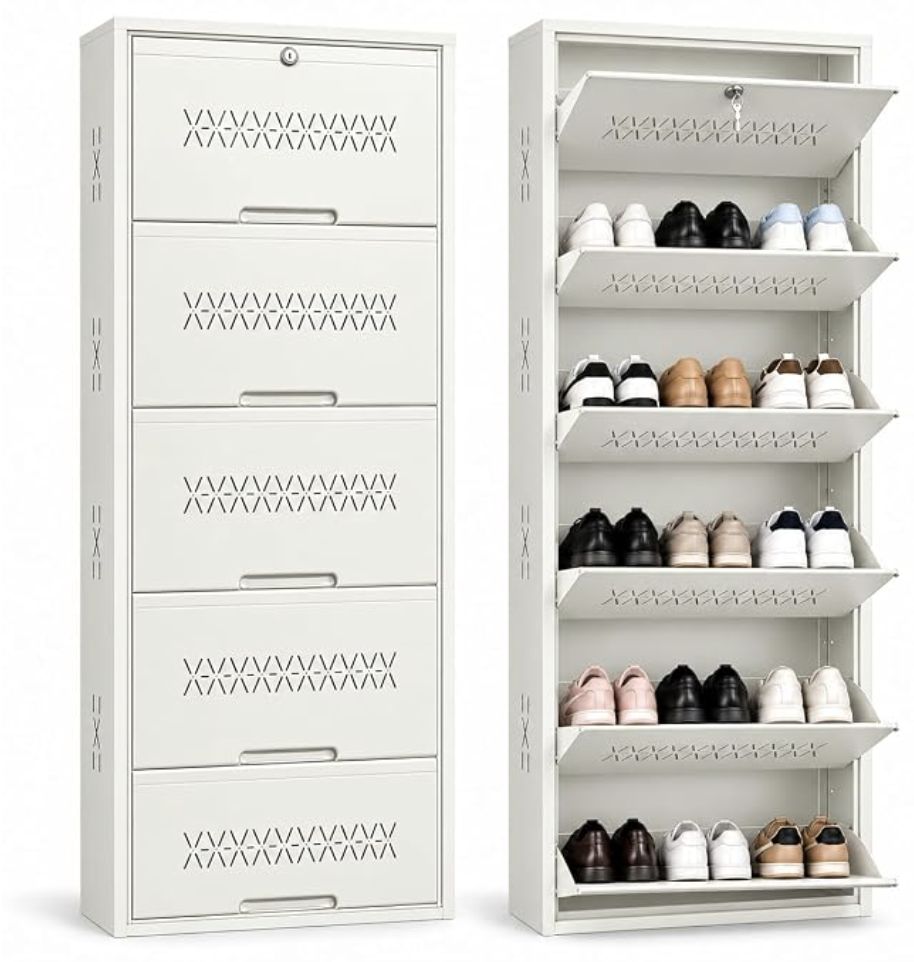
Skywave Luxury Wall Mounted Metal Shoe Rack with Lock | 1-2 Day Delivery | 5 Shelf | Heavy Duty Steel Shoe Cabinet | Central Locking | Space Saving | 3 Year Warranty (Ivory White, 26 Inches)
3. The 3 Checks to Audit Before Drilling Your Walls
Before you hire a carpenter or drill holes into your entryway wall, run these three quality checks on your delivered shoe rack:
Check 1: The Sheet Metal Deflection Palm Audit
- Place the unmounted shoe rack flat on the floor.
- Open the bottom drawer shelf and press firmly down on the center of the shelf tray with the heel of your palm (applying roughly 10kg of pressure).
- High-Gauge Steel (18-20 SWG): Yields less than 1mm with a solid, resonant feel.
- Low-Gauge Thin Tin (24 SWG): Makes a hollow metallic pop (oil-canning effect) and bows downward significantly. If it bows under palm pressure, it will permanently deform under two pairs of winter boots.
Check 2: The Simultaneous Linkage Pivot Test
- Open and close the drawers 10 times consecutively by pulling only the center handle.
- The movement should feel fluid and synchronized, with all shelves rotating on brass or hardened steel pivot rivets.
- If any shelf catches, squeaks harshly against the side wall, or requires two hands to pry open, the mechanical tolerances are defective; reject the piece before installation.
Check 3: The Heavy-Duty Metal Anchor Upgrade (Essential Installation Rule)
- Never use the standard plastic plugs included in the hardware bag.
- For solid brick or concrete walls, purchase M8 × 60mm Steel Expansion Sleeve Anchor Bolts (Shield Anchors) from your local hardware shop (costing ~₹15 each).
- For AAC lightweight block walls, use specialized nylon spiral expansion plugs or chemical toggle anchors.
- Steel sleeve anchors expand mechanically against solid masonry, providing over 150 kg of shear and pull-out resistance—ensuring your cabinet remains permanently anchored for decades.
Lab Recommendations & Furniture Buying Tools
To maximize your living space with durable, safe home storage:
- Live Multi-Store Price Comparison Engine: Compare verified steel furniture, shoe cabinets, and space-saving storage across Amazon and Flipkart.
- Furniture & Ergonomics Catalog: Explore wall-mounted units, ergonomic seating, and home office setups.
- The ₹4,999 Ergonomic Gaming Chair Scam: Read our furniture lab investigation on foam density and gas lift safety.